SOLDES
Jusqu'à -70% sur une sélection d'articles*

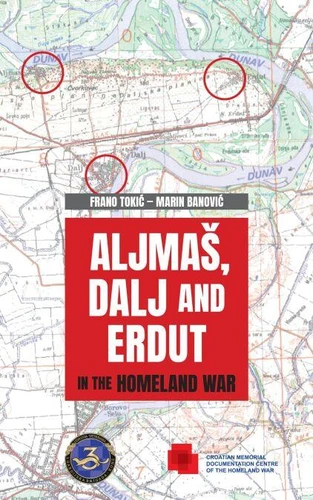
Aljmaš, Dalj and Erdut in the Homeland War
Par : ,Formats :
Disponible dans votre compte client Decitre ou Furet du Nord dès validation de votre commande. Le format ePub est :
- Compatible avec une lecture sur My Vivlio (smartphone, tablette, ordinateur)
- Compatible avec une lecture sur liseuses Vivlio
- Pour les liseuses autres que Vivlio, vous devez utiliser le logiciel Adobe Digital Edition. Non compatible avec la lecture sur les liseuses Kindle, Remarkable et Sony
 , qui est-ce ?
Notre partenaire de plateforme de lecture numérique où vous retrouverez l'ensemble de vos ebooks gratuitement
Pour en savoir plus sur nos ebooks, consultez notre aide en ligne ici
C'est si simple ! Lisez votre ebook avec l'app Vivlio sur votre tablette, mobile ou ordinateur :

- FormatePub
- ISBN8233470394
- EAN9798233470394
- Date de parution05/04/2026
- Protection num.pas de protection
- Infos supplémentairesepub
- ÉditeurLinda Balsamo
Résumé
The book Aljmas, Dalj and Erdut in the Homeland War addresses the events and people who contributed to the creation and defense of the Republic of Croatia in the area of today's Erdut municipality during 1990-1992. Through nine central chapters, the book begins with an ethno-demographic and geostrategic contextualization of the area under study in the period preceding the Greater Serbian aggression.
It then presents a large number of mostly unknown facts about events in 1990 and 1991 in the context of the transition from communism to democracy. This primarily concerns the founding of the Croatian Democratic Union and the Serbian Democratic Party, whose activities are linked to most of the political events of the period. Closely related to this is the process of creating para-political and paramilitary structures, i.e., the arming of rebellious Serbs from Dalj and Erdut.
Central chapters cover the artillery attack by the Yugoslav People's Army on Bogaljevci on 25 July 1991, and the capture of Aljmas, Dalj and Erdut on 1 August 1991 by rebellious Serbs from Dalj, Borovo Selo, Bijelo Brdo, Serbian paramilitary formations and the JNA. This is followed by a chapter on the evacuation of civilians and the extraction of defenders from encirclement. Special attention is given to the reconstruction of war crimes - the killings of prisoners of war and civilians, unlawful detention and torture of civilians, forced labor, rapes, the appropriation of private and public property, and the destruction of three Catholic churches.
The final two chapters provide a survey of Serbian and Croatian forces. Besides primary sources from several Croatian archives and the digital archive of the International Criminal Tribunal for the former Yugoslavia in The Hague, the book is also based on testimonies from more than seventy defenders and civilians who contributed to the defense of Aljmas, Dalj and Erdut.
It then presents a large number of mostly unknown facts about events in 1990 and 1991 in the context of the transition from communism to democracy. This primarily concerns the founding of the Croatian Democratic Union and the Serbian Democratic Party, whose activities are linked to most of the political events of the period. Closely related to this is the process of creating para-political and paramilitary structures, i.e., the arming of rebellious Serbs from Dalj and Erdut.
Central chapters cover the artillery attack by the Yugoslav People's Army on Bogaljevci on 25 July 1991, and the capture of Aljmas, Dalj and Erdut on 1 August 1991 by rebellious Serbs from Dalj, Borovo Selo, Bijelo Brdo, Serbian paramilitary formations and the JNA. This is followed by a chapter on the evacuation of civilians and the extraction of defenders from encirclement. Special attention is given to the reconstruction of war crimes - the killings of prisoners of war and civilians, unlawful detention and torture of civilians, forced labor, rapes, the appropriation of private and public property, and the destruction of three Catholic churches.
The final two chapters provide a survey of Serbian and Croatian forces. Besides primary sources from several Croatian archives and the digital archive of the International Criminal Tribunal for the former Yugoslavia in The Hague, the book is also based on testimonies from more than seventy defenders and civilians who contributed to the defense of Aljmas, Dalj and Erdut.