Focuses on psychology, emotional resilience, and modern identity in contemporary society.
Nouveauté
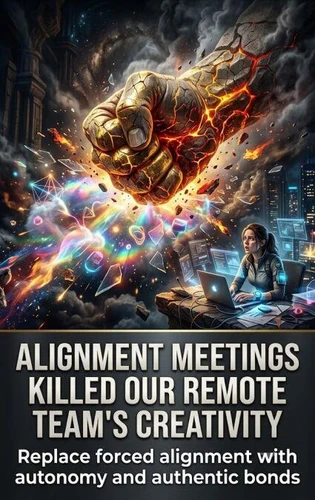
Alignment meetings killed our remote team's creativity. Replace forced alignment with autonomy and authentic bonds
Par :Formats :
Disponible dans votre compte client Decitre ou Furet du Nord dès validation de votre commande. Le format ePub est :
- Compatible avec une lecture sur My Vivlio (smartphone, tablette, ordinateur)
- Compatible avec une lecture sur liseuses Vivlio
- Pour les liseuses autres que Vivlio, vous devez utiliser le logiciel Adobe Digital Edition. Non compatible avec la lecture sur les liseuses Kindle, Remarkable et Sony
 , qui est-ce ?
Notre partenaire de plateforme de lecture numérique où vous retrouverez l'ensemble de vos ebooks gratuitement
Pour en savoir plus sur nos ebooks, consultez notre aide en ligne ici
C'est si simple ! Lisez votre ebook avec l'app Vivlio sur votre tablette, mobile ou ordinateur :

- Nombre de pages153
- FormatePub
- ISBN978-3-565-54852-1
- EAN9783565548521
- Date de parution08/07/2026
- Protection num.pas de protection
- Taille568 Ko
- Infos supplémentairesepub
- ÉditeurEmphaloz Publishing House
Résumé
Monday morning alignment huddles. Wednesday afternoon check-ins. Friday wrap-ups. You're spending hours synchronizing people who already know what to do, and your team is burning out on meetings that feel like they exist only for the sake of existing. The real cost isn't just time-it's the slow death of initiative, creativity, and genuine connection. This book exposes the hidden damage of over-alignment in remote teams and provides a practical alternative: a system that prioritizes clear outcomes, individual ownership, and trust over constant coordination.
Learn how to set boundaries that protect deep work, create communication rhythms that actually serve people, and foster an environment where team members feel safe to disagree, innovate, and build authentic relationships on their own terms. The result is a team that moves faster, thinks sharper, and actually enjoys working together. Because the best remote teams aren't the most aligned-they're the most alive.
Learn how to set boundaries that protect deep work, create communication rhythms that actually serve people, and foster an environment where team members feel safe to disagree, innovate, and build authentic relationships on their own terms. The result is a team that moves faster, thinks sharper, and actually enjoys working together. Because the best remote teams aren't the most aligned-they're the most alive.
A propos de Emma Whitaker

24,99 €

24,99 €