SOLDES
Jusqu'à -70% sur une sélection d'articles*

Nouveauté
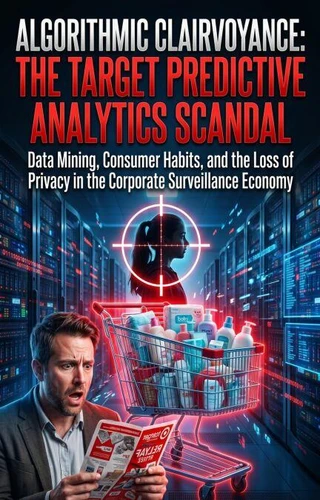
Algorithmic Clairvoyance: The Target Predictive Analytics Scandal. Data Mining, Consumer Habits, and the Loss of Privacy in the Corporate Surveillance Economy
Par :Formats :
Disponible dans votre compte client Decitre ou Furet du Nord dès validation de votre commande. Le format ePub est :
- Compatible avec une lecture sur My Vivlio (smartphone, tablette, ordinateur)
- Compatible avec une lecture sur liseuses Vivlio
- Pour les liseuses autres que Vivlio, vous devez utiliser le logiciel Adobe Digital Edition. Non compatible avec la lecture sur les liseuses Kindle, Remarkable et Sony
 , qui est-ce ?
Notre partenaire de plateforme de lecture numérique où vous retrouverez l'ensemble de vos ebooks gratuitement
Pour en savoir plus sur nos ebooks, consultez notre aide en ligne ici
C'est si simple ! Lisez votre ebook avec l'app Vivlio sur votre tablette, mobile ou ordinateur :

- Nombre de pages184
- FormatePub
- ISBN978-3-565-46287-2
- EAN9783565462872
- Date de parution27/05/2026
- Protection num.pas de protection
- Taille812 Ko
- Infos supplémentairesepub
- ÉditeurEmphaloz Publishing House
Résumé
Can a massive retail corporation analyze a customer's shopping habits so deeply that it literally knows a teenage girl is pregnant before she has even told her own father? This is not science fiction; it is the chilling, true story of Target's predictive analytics algorithm, which exposed the terrifying power of modern corporate surveillance.
Target realized that expecting parents are the most lucrative demographic in retail, but their shopping habits are deeply entrenched.
To intercept them early, Target's statisticians analyzed the purchase histories of millions of women. They discovered a highly specific, subconscious pattern of purchasing unscented lotion, specific supplements, and large bags of cotton balls around the second trimester. By feeding these data points into a predictive model, Target automatically mailed pregnancy coupons to a high school girl. Her furious father stormed into a local store to complain about the inappropriate mail, only to apologize days later when he learned the algorithm was actually correct. This sharp analysis of behavioral economics explores the dark side of big data.
It examines the "creepiness factor" of overt surveillance, how Target subsequently learned to mask their predictive coupons by surrounding them with random items, and the total erosion of digital privacy. Every purchase leaves a fingerprint. The Target analytics scandal reveals that consumer algorithms understand our subconscious biological changes better than our own families do.
To intercept them early, Target's statisticians analyzed the purchase histories of millions of women. They discovered a highly specific, subconscious pattern of purchasing unscented lotion, specific supplements, and large bags of cotton balls around the second trimester. By feeding these data points into a predictive model, Target automatically mailed pregnancy coupons to a high school girl. Her furious father stormed into a local store to complain about the inappropriate mail, only to apologize days later when he learned the algorithm was actually correct. This sharp analysis of behavioral economics explores the dark side of big data.
It examines the "creepiness factor" of overt surveillance, how Target subsequently learned to mask their predictive coupons by surrounding them with random items, and the total erosion of digital privacy. Every purchase leaves a fingerprint. The Target analytics scandal reveals that consumer algorithms understand our subconscious biological changes better than our own families do.