
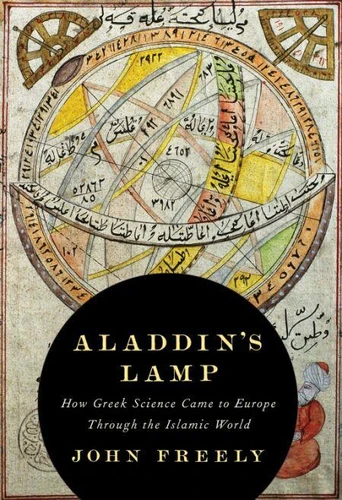
Aladdin's Lamp
Par :Formats :
Disponible dans votre compte client Decitre ou Furet du Nord dès validation de votre commande. Le format ePub protégé est :
- Compatible avec une lecture sur My Vivlio (smartphone, tablette, ordinateur)
- Compatible avec une lecture sur liseuses Vivlio
- Pour les liseuses autres que Vivlio, vous devez utiliser le logiciel Adobe Digital Edition. Non compatible avec la lecture sur les liseuses Kindle, Remarkable et Sony
- Non compatible avec un achat hors France métropolitaine
 , qui est-ce ?
Notre partenaire de plateforme de lecture numérique où vous retrouverez l'ensemble de vos ebooks gratuitement
Pour en savoir plus sur nos ebooks, consultez notre aide en ligne ici
C'est si simple ! Lisez votre ebook avec l'app Vivlio sur votre tablette, mobile ou ordinateur :

- Nombre de pages288
- FormatePub
- ISBN978-0-307-27132-7
- EAN9780307271327
- Date de parution17/02/2009
- Protection num.Adobe DRM
- Taille4 Mo
- Infos supplémentairesepub
- ÉditeurVintage
Résumé
Aladdin's Lamp is the fascinating story of how ancient Greek philosophy and science began in the sixth century B. C. and, during the next millennium, spread across the Greco-Roman world, producing the remarkable discoveries and theories of Thales, Pythagoras, Hippocrates, Plato, Aristotle, Euclid, Archimedes, Galen, Ptolemy, and many others. John Freely explains how, as the Dark Ages shrouded Europe, scholars in medieval Baghdad translated the works of these Greek thinkers into Arabic, spreading their ideas throughout the Islamic world from Central Asia to Spain, with many Muslim scientists, most notably Avicenna, Alhazen, and Averroës, adding their own interpretations to the philosophy and science they had inherited.
Freely goes on to show how, beginning in the twelfth century, these texts by Islamic scholars were then translated from Arabic into Latin, sparking the emergence of modern science at the dawn of the Renaissance, which climaxed in the Scientific Revolution of the seventeenth century.
Freely goes on to show how, beginning in the twelfth century, these texts by Islamic scholars were then translated from Arabic into Latin, sparking the emergence of modern science at the dawn of the Renaissance, which climaxed in the Scientific Revolution of the seventeenth century.
A propos de John Freely

13,60 €

18,50 €
18,95 €