SOLDES
Jusqu'à -70% sur une sélection d'articles*

Nouveauté
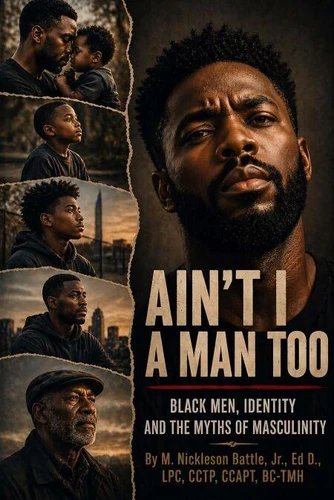
Ain't I A Man Too? Black Men Identity, And the Myths of Masculinity
Par :Formats :
Disponible dans votre compte client Decitre ou Furet du Nord dès validation de votre commande. Le format ePub est :
- Compatible avec une lecture sur My Vivlio (smartphone, tablette, ordinateur)
- Compatible avec une lecture sur liseuses Vivlio
- Pour les liseuses autres que Vivlio, vous devez utiliser le logiciel Adobe Digital Edition. Non compatible avec la lecture sur les liseuses Kindle, Remarkable et Sony
 , qui est-ce ?
Notre partenaire de plateforme de lecture numérique où vous retrouverez l'ensemble de vos ebooks gratuitement
Pour en savoir plus sur nos ebooks, consultez notre aide en ligne ici
C'est si simple ! Lisez votre ebook avec l'app Vivlio sur votre tablette, mobile ou ordinateur :

- FormatePub
- ISBN8995671534
- EAN9798995671534
- Date de parution16/06/2026
- Protection num.pas de protection
- Infos supplémentairesepub
- ÉditeurNick of Time Publishing
Résumé
Masculinity has been defined for Black men long before many ever had the chance to define it for themselves. Presented as universal, masculinity has often been shaped by systems, culture, survival, and expectations that forced many men to perform manhood rather than define it on their own terms. Ain't I a man too? examines how masculinity has been shaped by systems, cultural expectations, and historical structures that determine who gets full access to manhood and who is forced to prove it.
Through a culturally grounded and academically informed lens, it explores the emotional, relational, spiritual, and psychological impact of masculinity on men whose experiences have often existed outside of dominant definitions. We also introduce the Culturally Aligned Masculinity Assessment (CAMA), a reflective framework designed to help men identify patterns in how masculinity currently operates across self-awareness, relationships, community, and spiritual grounding.
Through culturally grounded archetypes and guided reflection, readers are encouraged to recognize where masculinity has become performance, survival, disconnection, or alignment. This book is ultimately about alignment. It is not a rejection of masculinity. It is an invitation to claim by becoming whole. And about deciding, for yourself, what it truly means to be a man.
Through a culturally grounded and academically informed lens, it explores the emotional, relational, spiritual, and psychological impact of masculinity on men whose experiences have often existed outside of dominant definitions. We also introduce the Culturally Aligned Masculinity Assessment (CAMA), a reflective framework designed to help men identify patterns in how masculinity currently operates across self-awareness, relationships, community, and spiritual grounding.
Through culturally grounded archetypes and guided reflection, readers are encouraged to recognize where masculinity has become performance, survival, disconnection, or alignment. This book is ultimately about alignment. It is not a rejection of masculinity. It is an invitation to claim by becoming whole. And about deciding, for yourself, what it truly means to be a man.