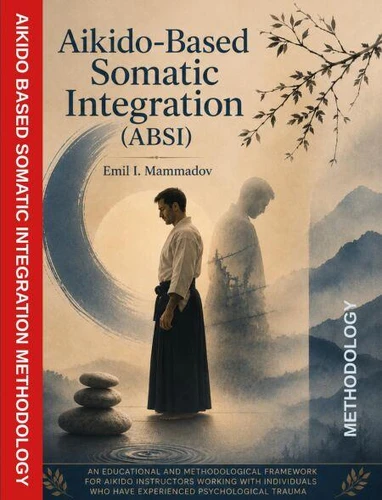
Aikido-Based Somatic Integration (ABSI-PTSD)An Educational and Practical Methodology for Aikido Instructors Can Aikido training be organized in a way that is safer and more supportive for people who have experienced psychological trauma?This book introduces Aikido-Based Somatic Integration (ABSI)-an original educational methodology that helps Aikido instructors create a calm, structured, and psychologically safe training environment.
Rather than presenting Aikido as psychotherapy or medical treatment, ABSI offers practical teaching principles based on trauma-informed practice: predictable class structure, respectful partner work, gradual progression, clear communication, and attention to personal boundaries. Inside, you will learn: the fundamentals of psychological trauma and PTSD;the instructor's role and professional limits;how to organize trauma-informed Aikido classes;practical approaches to partner work and physical contact;how to respond to panic attacks and other challenging situations;ethical guidelines, checklists, and ready-to-use teaching tools.
Written for Aikido instructors but valuable for martial arts teachers and coaches in general, this book provides a practical framework for creating training that is safe, respectful, and supportive. ABSI is an educational methodology, not a form of psychotherapy or medical treatment, and it is not intended to replace professional mental health care.
Aikido-Based Somatic Integration (ABSI-PTSD)An Educational and Practical Methodology for Aikido Instructors Can Aikido training be organized in a way that is safer and more supportive for people who have experienced psychological trauma?This book introduces Aikido-Based Somatic Integration (ABSI)-an original educational methodology that helps Aikido instructors create a calm, structured, and psychologically safe training environment.
Rather than presenting Aikido as psychotherapy or medical treatment, ABSI offers practical teaching principles based on trauma-informed practice: predictable class structure, respectful partner work, gradual progression, clear communication, and attention to personal boundaries. Inside, you will learn: the fundamentals of psychological trauma and PTSD;the instructor's role and professional limits;how to organize trauma-informed Aikido classes;practical approaches to partner work and physical contact;how to respond to panic attacks and other challenging situations;ethical guidelines, checklists, and ready-to-use teaching tools.
Written for Aikido instructors but valuable for martial arts teachers and coaches in general, this book provides a practical framework for creating training that is safe, respectful, and supportive. ABSI is an educational methodology, not a form of psychotherapy or medical treatment, and it is not intended to replace professional mental health care.


 , qui est-ce ?