SOLDES
Jusqu'à -70% sur une sélection d'articles*

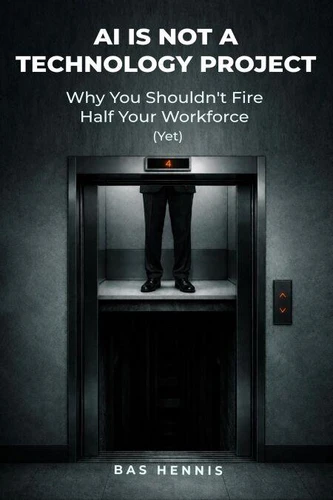
AI Is Not A Technology Project: Why You Shouldn't Fire Half Your Workforce (Yet). Your Missing (AI) Strategy
Par :Formats :
Disponible dans votre compte client Decitre ou Furet du Nord dès validation de votre commande. Le format ePub est :
- Compatible avec une lecture sur My Vivlio (smartphone, tablette, ordinateur)
- Compatible avec une lecture sur liseuses Vivlio
- Pour les liseuses autres que Vivlio, vous devez utiliser le logiciel Adobe Digital Edition. Non compatible avec la lecture sur les liseuses Kindle, Remarkable et Sony
 , qui est-ce ?
Notre partenaire de plateforme de lecture numérique où vous retrouverez l'ensemble de vos ebooks gratuitement
Pour en savoir plus sur nos ebooks, consultez notre aide en ligne ici
C'est si simple ! Lisez votre ebook avec l'app Vivlio sur votre tablette, mobile ou ordinateur :

- FormatePub
- ISBN8235353930
- EAN9798235353930
- Date de parution17/04/2026
- Protection num.pas de protection
- Infos supplémentairesepub
- ÉditeurIoakim Ioakim
Résumé
If you're afraid AI will take your job, just give this book to your boss. Klarna replaced 700 support staff with AI. Then quietly started rehiring when quality collapsed. GE spent four billion dollars on an AI platform its own business units refused to use. Gothenburg let an algorithm assign 12, 000 children to schools using the wrong distance calculation. Nobody checked for years. The technology worked.
What failed was everything around it. AI Is Not a Technology Project is for the person the board turns to when someone asks "what are we doing about AI?" The one who suspects the honest answer is: not enough, and not the right things. What this book covers:How AI changes work at the task level before it changes headcount. Why pilots stall and never scale. What algorithmic management tools are already doing inside your building without anyone calling them that.
Why middle managers are the real bottleneck and nobody is equipping them. What AI literacy actually requires under EU law, and why most organisations are not there yet. Who should own AI coordination when no single department can. And what the organisations that get it right do differently: the task-level groundwork, the management capability, the governance infrastructure that turns AI from an expensive experiment into something that actually delivers.
The evidence comes from the OECD, Eurostat, Cedefop, the JRC, Eurofound, the ILO and the European Commission. The cases include court rulings, regulatory fines and documented organisational failures. The positions are clear: AI that can do a job better than a human should do that job. Governance is infrastructure for growth, not a compliance burden. And organisations that skip the hard work of understanding their own operations before deploying AI do not save time.
They borrow it. This is not a technology book. It is a book about the work that makes the technology worth buying.
What failed was everything around it. AI Is Not a Technology Project is for the person the board turns to when someone asks "what are we doing about AI?" The one who suspects the honest answer is: not enough, and not the right things. What this book covers:How AI changes work at the task level before it changes headcount. Why pilots stall and never scale. What algorithmic management tools are already doing inside your building without anyone calling them that.
Why middle managers are the real bottleneck and nobody is equipping them. What AI literacy actually requires under EU law, and why most organisations are not there yet. Who should own AI coordination when no single department can. And what the organisations that get it right do differently: the task-level groundwork, the management capability, the governance infrastructure that turns AI from an expensive experiment into something that actually delivers.
The evidence comes from the OECD, Eurostat, Cedefop, the JRC, Eurofound, the ILO and the European Commission. The cases include court rulings, regulatory fines and documented organisational failures. The positions are clear: AI that can do a job better than a human should do that job. Governance is infrastructure for growth, not a compliance burden. And organisations that skip the hard work of understanding their own operations before deploying AI do not save time.
They borrow it. This is not a technology book. It is a book about the work that makes the technology worth buying.