OFFRE LISEUSES
Une liseuse achetée = une housse offerte* jusqu'au 21 juin

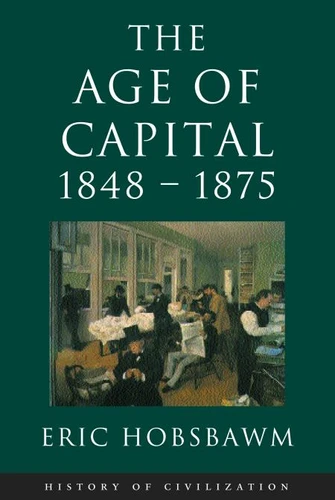
Age Of Capital: 1848-1875
Par :Formats :
Disponible dans votre compte client Decitre ou Furet du Nord dès validation de votre commande. Le format ePub protégé est :
- Compatible avec une lecture sur My Vivlio (smartphone, tablette, ordinateur)
- Compatible avec une lecture sur liseuses Vivlio
- Pour les liseuses autres que Vivlio, vous devez utiliser le logiciel Adobe Digital Edition. Non compatible avec la lecture sur les liseuses Kindle, Remarkable et Sony
- Non compatible avec un achat hors France métropolitaine
 , qui est-ce ?
Notre partenaire de plateforme de lecture numérique où vous retrouverez l'ensemble de vos ebooks gratuitement
Pour en savoir plus sur nos ebooks, consultez notre aide en ligne ici
C'est si simple ! Lisez votre ebook avec l'app Vivlio sur votre tablette, mobile ou ordinateur :

- Nombre de pages400
- FormatePub
- ISBN978-0-297-86528-5
- EAN9780297865285
- Date de parution15/12/2010
- Protection num.Adobe DRM
- Infos supplémentairesepub
- ÉditeurWeidenfeld & Nicolson
Résumé
A magisterial account of the rise of capitalismEric Hobsbawm's magnificent treatment of the crucial years 1848-1875 is a penetrating analysis of the rise of capitalism and the consolidation of bourgeois culture. In the 1860s a new word entered the economic and political vocabulary of the world: 'capitalism'. The global triumph of capitalism is the major theme of history in the decades after 1848. The extension of capitalist economy to four corners of the globe, the mounting concentration of wealth, the migration of men, the domination of Europe and European culture made the third quarter of the nineteenth century a watershed.
This is a history not only of Europe but of the world. Eric Hobsbawm's intention is not to summarise facts, but to draw facts together into a historical synthesis, to 'make sense of' the period, and to trace the roots of the present world back to it. He integrates economics with political and intellectual developments in this objective yet original account of revolution and the failure of revolution, of the cycles of boom and slump that characterise capitalist economies, of the victims and victors of the bourgeois ethos.
This is a history not only of Europe but of the world. Eric Hobsbawm's intention is not to summarise facts, but to draw facts together into a historical synthesis, to 'make sense of' the period, and to trace the roots of the present world back to it. He integrates economics with political and intellectual developments in this objective yet original account of revolution and the failure of revolution, of the cycles of boom and slump that characterise capitalist economies, of the victims and victors of the bourgeois ethos.
A propos de Eric Hobsbawm



Les bandits
E-book
11,99 €


4,80 €

On Nationalism
E-book
3,99 €
Primitive Rebels
E-book
3,99 €

3,99 €
Worlds of Labour
E-book
3,99 €