
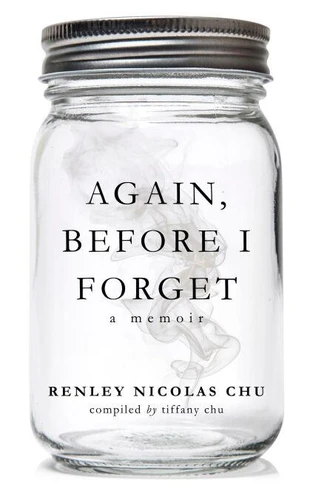
Again, Before I Forget
Par :Formats :
Disponible dans votre compte client Decitre ou Furet du Nord dès validation de votre commande. Le format ePub est :
- Compatible avec une lecture sur My Vivlio (smartphone, tablette, ordinateur)
- Compatible avec une lecture sur liseuses Vivlio
- Pour les liseuses autres que Vivlio, vous devez utiliser le logiciel Adobe Digital Edition. Non compatible avec la lecture sur les liseuses Kindle, Remarkable et Sony
 , qui est-ce ?
Notre partenaire de plateforme de lecture numérique où vous retrouverez l'ensemble de vos ebooks gratuitement
Pour en savoir plus sur nos ebooks, consultez notre aide en ligne ici
C'est si simple ! Lisez votre ebook avec l'app Vivlio sur votre tablette, mobile ou ordinateur :

- FormatePub
- ISBN8993753171
- EAN9798993753171
- Date de parution21/06/2026
- Protection num.pas de protection
- Infos supplémentairesepub
- ÉditeurGlass Bottle Press
Résumé
He wrote because he did not want to forget. At five, Renley Nicolas Chu survived the fire that took his parentsand his voice. At eight, he was adopted into a home thatbecame, over the next decade, the site of his abuse andtra?cking. At seventeen, in stolen hours between hospital wardsand safe houses, he began to write-pouring his memories intojars he could carry, before time and other people's cruelty couldempty them out. He died three days before he was meant to come home. Again, Before I Forget gathers the prose, poems, and lettersRenley wrote in the final year of his life, edited and framed by hisalmost-adoptive mother, Ti?any Chu.
The book moves from fireand forgetting through entrapment, dissociation, and survivaltoward something Ren had nearly stopped believing waspossible: to be fully known, and fully loved. Ti?any's quietintroductions hold the context; the writing itself is entirely his. What remains is not a record of what was done to him, but atestament to who he was-a boy who could not speak, and whorefused, even at the end, to go unheard.
The book moves from fireand forgetting through entrapment, dissociation, and survivaltoward something Ren had nearly stopped believing waspossible: to be fully known, and fully loved. Ti?any's quietintroductions hold the context; the writing itself is entirely his. What remains is not a record of what was done to him, but atestament to who he was-a boy who could not speak, and whorefused, even at the end, to go unheard.