
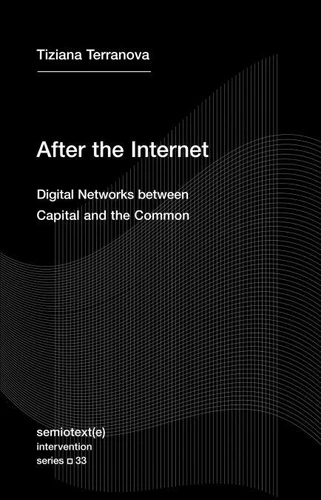
After the Internet. Digital Networks between Capital and the Common
Par :Formats :
Disponible dans votre compte client Decitre ou Furet du Nord dès validation de votre commande. Le format ePub protégé est :
- Compatible avec une lecture sur My Vivlio (smartphone, tablette, ordinateur)
- Compatible avec une lecture sur liseuses Vivlio
- Pour les liseuses autres que Vivlio, vous devez utiliser le logiciel Adobe Digital Edition. Non compatible avec la lecture sur les liseuses Kindle, Remarkable et Sony
- Non compatible avec un achat hors France métropolitaine
 , qui est-ce ?
Notre partenaire de plateforme de lecture numérique où vous retrouverez l'ensemble de vos ebooks gratuitement
Pour en savoir plus sur nos ebooks, consultez notre aide en ligne ici
C'est si simple ! Lisez votre ebook avec l'app Vivlio sur votre tablette, mobile ou ordinateur :

- Nombre de pages216
- FormatePub
- ISBN978-1-63590-169-6
- EAN9781635901696
- Date de parution13/12/2022
- Protection num.Adobe DRM
- Taille506 Ko
- Infos supplémentairesepub
- ÉditeurSemiotext(e)
Résumé
On the internet's transformation from communication tool to computational infrastructure. The internet is no more. If it still exists, it does so only as a residual technology, still effective in the present but less intelligible as such. After nearly two decades and a couple of financial crises, it has become the almost imperceptible background of today's Corporate Platform Complex (CPC)-a pervasive planetary technological infrastructure that meshes communication with computation.
In the essays collected in this book, written mostly between the mid-2000s and the late 2010s, Tiziana Terranova bears witness to this monstrous transformation. Mobilizing theories of cognitive capitalism, neo-monadology, and sympathetic cooperation, considering ideas such as the attention economy and its psychopathologies, and evoking the relation between algorithmic automation and the Common, she provides real-time takes on the mutations that have changed the technological, cultural, and economic ethos of the Internet.
Mostly conceived, elaborated, and discussed in collective activist spaces, After the Internet is neither apocalyptic lamentation nor melancholic "rise and fall" story of betrayed great expectations. On the contrary, it looks within the folds of the recent past to unfold the potential futurities that the post-digital computational present still entails.
In the essays collected in this book, written mostly between the mid-2000s and the late 2010s, Tiziana Terranova bears witness to this monstrous transformation. Mobilizing theories of cognitive capitalism, neo-monadology, and sympathetic cooperation, considering ideas such as the attention economy and its psychopathologies, and evoking the relation between algorithmic automation and the Common, she provides real-time takes on the mutations that have changed the technological, cultural, and economic ethos of the Internet.
Mostly conceived, elaborated, and discussed in collective activist spaces, After the Internet is neither apocalyptic lamentation nor melancholic "rise and fall" story of betrayed great expectations. On the contrary, it looks within the folds of the recent past to unfold the potential futurities that the post-digital computational present still entails.