SOLDES
Jusqu'à -70% sur une sélection d'articles*

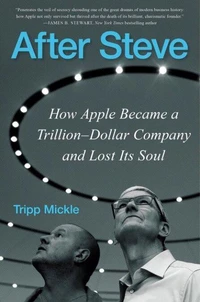
After Steve. How Apple became a Trillion-Dollar Company and Lost Its Soul
Par :Formats :
Disponible dans votre compte client Decitre ou Furet du Nord dès validation de votre commande. Le format ePub protégé est :
- Compatible avec une lecture sur My Vivlio (smartphone, tablette, ordinateur)
- Compatible avec une lecture sur liseuses Vivlio
- Pour les liseuses autres que Vivlio, vous devez utiliser le logiciel Adobe Digital Edition. Non compatible avec la lecture sur les liseuses Kindle, Remarkable et Sony
- Non compatible avec un achat hors France métropolitaine
 , qui est-ce ?
Notre partenaire de plateforme de lecture numérique où vous retrouverez l'ensemble de vos ebooks gratuitement
Pour en savoir plus sur nos ebooks, consultez notre aide en ligne ici
C'est si simple ! Lisez votre ebook avec l'app Vivlio sur votre tablette, mobile ou ordinateur :

- Nombre de pages512
- FormatePub
- ISBN978-0-00-852785-3
- EAN9780008527853
- Date de parution12/05/2022
- Protection num.Adobe DRM
- Infos supplémentairesepub
- ÉditeurHarperCollins
Résumé
From the Wall Street Journal's Tripp Mickle, the dramatic, untold story inside Apple after the passing of Steve Jobs by following his top lieutenants-Jony Ive, the Chief Design Officer, and Tim Cook, the COO-turned-CEO-and how the fading of the former and the rise of the latter led to Apple losing its soul.
Steve Jobs called Jony Ive his "spiritual partner at Apple." The London-born genius was the second-most powerful person at Apple and the creative force who most embodies Jobs's spirit, the man who designed the products adopted by hundreds of millions the world over: the iPod, iPad, MacBook Air, the iMac G3, and the iPhone.
In the wake of his close collaborator's death, the chief designer wrestled with grief and initially threw himself into his work designing the new Apple headquarters and the Watch before losing his motivation in a company increasingly devoted more to margins than to inspiration. In many ways, Cook was Ive's opposite. The product of a small Alabama town, he had risen through the ranks from the supply side of the company.
His gift was not the creation of new products. Instead, he had invented countless ways to maximize a margin, squeezing some suppliers, persuading others to build factories the size of cities to churn out more units. He considered inventory evil. He knew how to make subordinates sweat with withering questions. Jobs selected Cook as his successor, and Cook oversaw a period of tremendous revenue growth that has lifted Apple's valuation to $3 trillion.
He built a commanding business in China and rapidly distinguished himself as a master politician who could forge global alliances and send the world's stock market into freefall with a single sentence. Author Tripp Mickle spoke with more than 200 current and former Apple executives, as well as figures key to this period of Apple's history, including Trump administration officials and fashion luminaries such as Anna Wintour while writing After Steve.
His research shows the company's success came at a cost. Apple lost its innovative spirit and has not designed a new category of device in years. Ive's departure in 2019 marked a culmination in Apple's shift from a company of innovation to one of operational excellence, and the price is a company that has lost its soul.
In the wake of his close collaborator's death, the chief designer wrestled with grief and initially threw himself into his work designing the new Apple headquarters and the Watch before losing his motivation in a company increasingly devoted more to margins than to inspiration. In many ways, Cook was Ive's opposite. The product of a small Alabama town, he had risen through the ranks from the supply side of the company.
His gift was not the creation of new products. Instead, he had invented countless ways to maximize a margin, squeezing some suppliers, persuading others to build factories the size of cities to churn out more units. He considered inventory evil. He knew how to make subordinates sweat with withering questions. Jobs selected Cook as his successor, and Cook oversaw a period of tremendous revenue growth that has lifted Apple's valuation to $3 trillion.
He built a commanding business in China and rapidly distinguished himself as a master politician who could forge global alliances and send the world's stock market into freefall with a single sentence. Author Tripp Mickle spoke with more than 200 current and former Apple executives, as well as figures key to this period of Apple's history, including Trump administration officials and fashion luminaries such as Anna Wintour while writing After Steve.
His research shows the company's success came at a cost. Apple lost its innovative spirit and has not designed a new category of device in years. Ive's departure in 2019 marked a culmination in Apple's shift from a company of innovation to one of operational excellence, and the price is a company that has lost its soul.