SOLDES
Jusqu'à -70% sur une sélection d'articles*

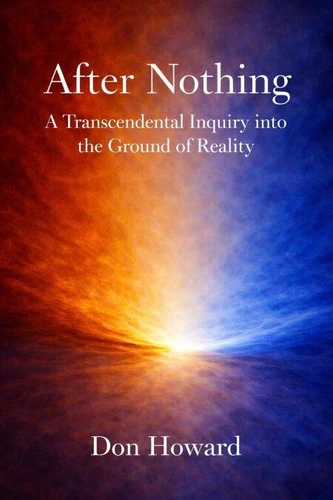
After Nothing: A Transcendental Inquiry into the Ground of Reality
Par :Formats :
Disponible dans votre compte client Decitre ou Furet du Nord dès validation de votre commande. Le format ePub est :
- Compatible avec une lecture sur My Vivlio (smartphone, tablette, ordinateur)
- Compatible avec une lecture sur liseuses Vivlio
- Pour les liseuses autres que Vivlio, vous devez utiliser le logiciel Adobe Digital Edition. Non compatible avec la lecture sur les liseuses Kindle, Remarkable et Sony
 , qui est-ce ?
Notre partenaire de plateforme de lecture numérique où vous retrouverez l'ensemble de vos ebooks gratuitement
Pour en savoir plus sur nos ebooks, consultez notre aide en ligne ici
C'est si simple ! Lisez votre ebook avec l'app Vivlio sur votre tablette, mobile ou ordinateur :

- FormatePub
- ISBN8994251638
- EAN9798994251638
- Date de parution19/04/2026
- Protection num.pas de protection
- Infos supplémentairesepub
- ÉditeurGroupe Business Thérapie
Résumé
Why is there something rather than nothing?Most answers to this question either speculate about what lies beyond experience or retreat into silence. After Nothingdoes neither. Beginning from what is simply here - a world that is structured, conscious, normative, and free - Don Howard reasons backward by strict transcendental argument to what the ground of reality must be like in order for such a world to exist.
Not what it might be. Not what we might prefer it to be. What it must be. The result is a set of derived constraints on the ground of reality - precise, cumulative, and progressively tightened across fifteen chapters. These constraints are tested against the features of experience that resist easy explanation: consciousness, freedom, evil, suffering, love, and death. Each test sharpens the account and requires that it hold under pressure.
What emerges is not a familiar conclusion. The categories we have inherited - from science, theology, and philosophy - prove insufficient to what the argument establishes. The deepest reason may not lie in a failure of thought, but in a structural limit of finite description itself. After Nothing is a work of serious philosophical argument. The opening chapters are demanding; what follows, while still rigorous, becomes more accessible as the argument unfolds.
Readers who follow the full trajectory will arrive not at a final answer, but at something more precisely located: a carefully earned account of what reality must allow - and the point at which explanation reaches its limit. Second volume in The Origins of Existence Trilogy. It can be read independently, though the full arc is cumulative.
Not what it might be. Not what we might prefer it to be. What it must be. The result is a set of derived constraints on the ground of reality - precise, cumulative, and progressively tightened across fifteen chapters. These constraints are tested against the features of experience that resist easy explanation: consciousness, freedom, evil, suffering, love, and death. Each test sharpens the account and requires that it hold under pressure.
What emerges is not a familiar conclusion. The categories we have inherited - from science, theology, and philosophy - prove insufficient to what the argument establishes. The deepest reason may not lie in a failure of thought, but in a structural limit of finite description itself. After Nothing is a work of serious philosophical argument. The opening chapters are demanding; what follows, while still rigorous, becomes more accessible as the argument unfolds.
Readers who follow the full trajectory will arrive not at a final answer, but at something more precisely located: a carefully earned account of what reality must allow - and the point at which explanation reaches its limit. Second volume in The Origins of Existence Trilogy. It can be read independently, though the full arc is cumulative.