SOLDES
Jusqu'à -70% sur une sélection d'articles*

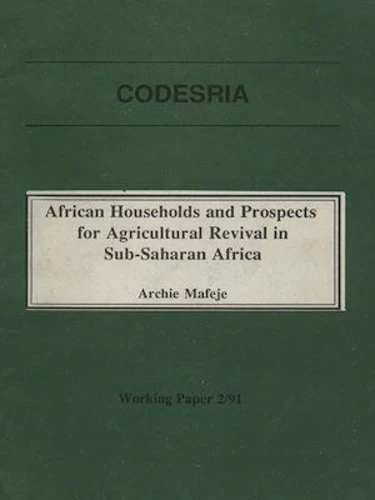
African households and prospects for agricultural revival in Sub-Saharan Africa. Working Paper 2/91
Par :Formats :
Disponible dans votre compte client Decitre ou Furet du Nord dès validation de votre commande. Le format ePub est :
- Compatible avec une lecture sur My Vivlio (smartphone, tablette, ordinateur)
- Compatible avec une lecture sur liseuses Vivlio
- Pour les liseuses autres que Vivlio, vous devez utiliser le logiciel Adobe Digital Edition. Non compatible avec la lecture sur les liseuses Kindle, Remarkable et Sony
 , qui est-ce ?
Notre partenaire de plateforme de lecture numérique où vous retrouverez l'ensemble de vos ebooks gratuitement
Pour en savoir plus sur nos ebooks, consultez notre aide en ligne ici
C'est si simple ! Lisez votre ebook avec l'app Vivlio sur votre tablette, mobile ou ordinateur :

- Nombre de pages134
- FormatePub
- ISBN978-2-86978-983-8
- EAN9782869789838
- Date de parution12/10/2020
- Protection num.Digital Watermarking
- Taille471 Ko
- Infos supplémentairesepub
- ÉditeurCODESRIA
Résumé
The relationship between development and historical traditions has pervaded theories of social development since the 19th century. This has been particularly true of the transformation of agrarian societies, as is shown by the great debates that centered on the future of the mir in Russia, the transition from feudalism to capitalism in western Europe, the incorporation of the Indian communities in the Americas into the capitalist system and by the controversy surrounding the so-called Asiatic mode of production in the Orient.
What is striking about all these theories is that not only are they historical but also have a very strong geo-social referent However, this has not deterred most students of African societies from employing the same geo-social analogies in their analysis of the transformations that have occurred on the continent since the advent of colonialism. In this respect modernization and diffusionist theories of the 1950s and 1960s should be seen as nothing else but cruder culturalist (and imperialist) versions of classical European theories.
In consequence those concerned (including colonized Africans) can be accused of having willfully ignored the specificity of the African geo-social context...
What is striking about all these theories is that not only are they historical but also have a very strong geo-social referent However, this has not deterred most students of African societies from employing the same geo-social analogies in their analysis of the transformations that have occurred on the continent since the advent of colonialism. In this respect modernization and diffusionist theories of the 1950s and 1960s should be seen as nothing else but cruder culturalist (and imperialist) versions of classical European theories.
In consequence those concerned (including colonized Africans) can be accused of having willfully ignored the specificity of the African geo-social context...