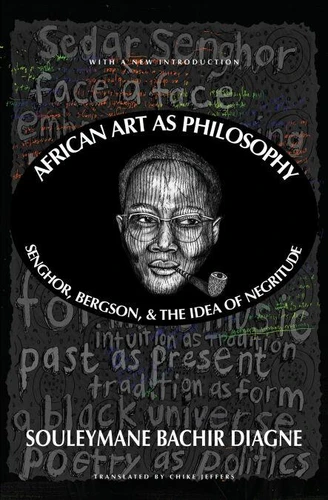
African Art as Philosophy
Par :Formats :
Disponible dans votre compte client Decitre ou Furet du Nord dès validation de votre commande. Le format ePub protégé est :
- Compatible avec une lecture sur My Vivlio (smartphone, tablette, ordinateur)
- Compatible avec une lecture sur liseuses Vivlio
- Pour les liseuses autres que Vivlio, vous devez utiliser le logiciel Adobe Digital Edition. Non compatible avec la lecture sur les liseuses Kindle, Remarkable et Sony
- Non compatible avec un achat hors France métropolitaine
 , qui est-ce ?
Notre partenaire de plateforme de lecture numérique où vous retrouverez l'ensemble de vos ebooks gratuitement
Pour en savoir plus sur nos ebooks, consultez notre aide en ligne ici
C'est si simple ! Lisez votre ebook avec l'app Vivlio sur votre tablette, mobile ou ordinateur :

- Nombre de pages224
- FormatePub
- ISBN978-1-63542-322-8
- EAN9781635423228
- Date de parution05/09/2023
- Protection num.Adobe DRM
- Taille2 Mo
- Infos supplémentairesepub
- ÉditeurOther Press
Résumé
This critically acclaimed study offers a distinct, incisive look at how Senegalese philosopher Senghor sees in African art the most acute expression of Bergson's philosophy. Léopold Sédar Senghor (1906-2001) was a Senegalese poet and philosopher who in 1960 also became the first president of the Republic of Senegal. In African Art as Philosophy, Souleymane Bachir Diagne uses a unique approach to reading Senghor's influential works, taking as the starting point for his analysis Henri Bergson's idea that in order to understand philosophers, one must find the initial intuition from which every aspect of their work develops.
In the case of Senghor, Diagne argues that his primordial intuition is that African art is a philosophy. To further this point, Diagne looks at what Senghor called the "1889 Revolution" (the year Bergson's Time and Free Will was published), as well as the influential writers and publications of that period-specifically, Nietzsche and Rimbaud. The 1889 Revolution, Senghor claims, is what led him to the understanding of the "Vitalism" at the core of African religions and beliefs that found expression in the arts.
In the case of Senghor, Diagne argues that his primordial intuition is that African art is a philosophy. To further this point, Diagne looks at what Senghor called the "1889 Revolution" (the year Bergson's Time and Free Will was published), as well as the influential writers and publications of that period-specifically, Nietzsche and Rimbaud. The 1889 Revolution, Senghor claims, is what led him to the understanding of the "Vitalism" at the core of African religions and beliefs that found expression in the arts.
A propos de Souleymane Bachir Diagne
Les universels du Louvre
Grand Format
22,90 €
L'imaginaire prédateur
E-book
19,99 €

Paroles de Rhumatisants
E-book
8,99 €
Religion et ritualité
E-book
10,99 €