
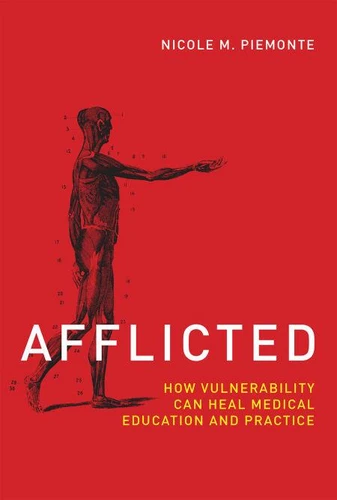
Afflicted. How Vulnerability Can Heal Medical Education and Practice
Par :Formats :
Disponible dans votre compte client Decitre ou Furet du Nord dès validation de votre commande. Le format ePub protégé est :
- Compatible avec une lecture sur My Vivlio (smartphone, tablette, ordinateur)
- Compatible avec une lecture sur liseuses Vivlio
- Pour les liseuses autres que Vivlio, vous devez utiliser le logiciel Adobe Digital Edition. Non compatible avec la lecture sur les liseuses Kindle, Remarkable et Sony
- Non compatible avec un achat hors France métropolitaine
 , qui est-ce ?
Notre partenaire de plateforme de lecture numérique où vous retrouverez l'ensemble de vos ebooks gratuitement
Pour en savoir plus sur nos ebooks, consultez notre aide en ligne ici
C'est si simple ! Lisez votre ebook avec l'app Vivlio sur votre tablette, mobile ou ordinateur :

- Nombre de pages304
- FormatePub
- ISBN978-0-262-34497-5
- EAN9780262344975
- Date de parution26/01/2018
- Protection num.Adobe DRM
- Taille450 Ko
- Infos supplémentairesepub
- ÉditeurThe MIT Press
Résumé
How medical education and practice can move beyond a narrow focus on biological intervention to recognize the lived experiences of illness, suffering, and death. In Afflicted, Nicole Piemonte examines the preoccupation in medicine with cure over care, arguing that the traditional focus on biological intervention keeps medicine from addressing the complex realities of patient suffering. Although many have pointed to the lack of compassion and empathy in medical practice, few have considered the deeper philosophical, psychological, and ontological reasons for it.
Piemonte fills that gap, examining why it is that clinicians and medical trainees largely evade issues of vulnerability and mortality and, doing so, offer patients compromised care. She argues that contemporary medical pedagogy and epistemology are not only shaped by the human tendency to flee from the reality of death and suffering but also perpetuate it. The root of the problem, she writes, is the educational and institutional culture that promotes reductionist understandings of care, illness, and suffering but avoids any authentic confrontation with human suffering and the fear and self-doubt that can come with that confrontation.
Through a philosophical analysis of the patient-practitioner encounter, Piemonte argues that the doctor, in escaping from authentic engagement with a patient who is suffering, in fact "escapes from herself."Piemonte explores the epistemology and pedagogy of medicine, examines its focus on calculative or technical thinking, and considers how "clinical detachment" diminishes physicians. She suggests ways that educators might cultivate the capacity for authentic patient care and proposes specific curricular changes to help students expand their moral imaginations.
Piemonte fills that gap, examining why it is that clinicians and medical trainees largely evade issues of vulnerability and mortality and, doing so, offer patients compromised care. She argues that contemporary medical pedagogy and epistemology are not only shaped by the human tendency to flee from the reality of death and suffering but also perpetuate it. The root of the problem, she writes, is the educational and institutional culture that promotes reductionist understandings of care, illness, and suffering but avoids any authentic confrontation with human suffering and the fear and self-doubt that can come with that confrontation.
Through a philosophical analysis of the patient-practitioner encounter, Piemonte argues that the doctor, in escaping from authentic engagement with a patient who is suffering, in fact "escapes from herself."Piemonte explores the epistemology and pedagogy of medicine, examines its focus on calculative or technical thinking, and considers how "clinical detachment" diminishes physicians. She suggests ways that educators might cultivate the capacity for authentic patient care and proposes specific curricular changes to help students expand their moral imaginations.