
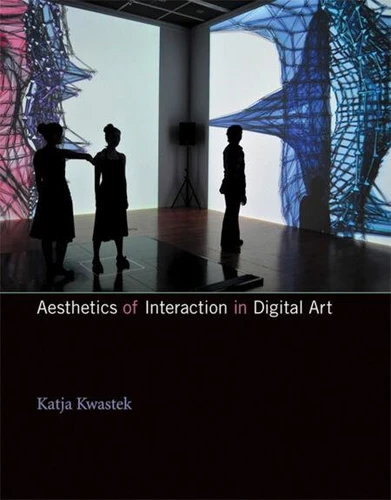
Aesthetics of Interaction in Digital Art
Par :Formats :
Disponible dans votre compte client Decitre ou Furet du Nord dès validation de votre commande. Le format ePub protégé est :
- Compatible avec une lecture sur My Vivlio (smartphone, tablette, ordinateur)
- Compatible avec une lecture sur liseuses Vivlio
- Pour les liseuses autres que Vivlio, vous devez utiliser le logiciel Adobe Digital Edition. Non compatible avec la lecture sur les liseuses Kindle, Remarkable et Sony
- Non compatible avec un achat hors France métropolitaine
 , qui est-ce ?
Notre partenaire de plateforme de lecture numérique où vous retrouverez l'ensemble de vos ebooks gratuitement
Pour en savoir plus sur nos ebooks, consultez notre aide en ligne ici
C'est si simple ! Lisez votre ebook avec l'app Vivlio sur votre tablette, mobile ou ordinateur :

- Nombre de pages384
- FormatePub
- ISBN978-0-262-31722-1
- EAN9780262317221
- Date de parution20/09/2013
- Protection num.Adobe DRM
- Taille4 Mo
- Infos supplémentairesepub
- ÉditeurThe MIT Press
Résumé
An art-historical perspective on interactive media art that provides theoretical and methodological tools for understanding and analyzing digital art. Since the 1960s, artworks that involve the participation of the spectator have received extensive scholarly attention. Yet interactive artworks using digital media still present a challenge for academic art history. In this book, Katja Kwastek argues that the particular aesthetic experience enabled by these new media works can open up new perspectives for our understanding of art and media alike.
Kwastek, herself an art historian, offers a set of theoretical and methodological tools that are suitable for understanding and analyzing not only new media art but also other contemporary art forms. Addressing both the theoretician and the practitioner, Kwastek provides an introduction to the history and the terminology of interactive art, a theory of the aesthetics of interaction, and exemplary case studies of interactive media art.
Kwastek lays the historical and theoretical groundwork and then develops an aesthetics of interaction, discussing such aspects as real space and data space, temporal structures, instrumental and phenomenal perspectives, and the relationship between materiality and interpretability. Finally, she applies her theory to specific works of interactive media art, including narratives in virtual and real space, interactive installations, and performance-with case studies of works by Olia Lialina, Susanne Berkenheger, Stefan Schemat, Teri Rueb, Lynn Hershman, Agnes Hegedüs, Tmema, David Rokeby, Sonia Cillari, and Blast Theory.
Kwastek, herself an art historian, offers a set of theoretical and methodological tools that are suitable for understanding and analyzing not only new media art but also other contemporary art forms. Addressing both the theoretician and the practitioner, Kwastek provides an introduction to the history and the terminology of interactive art, a theory of the aesthetics of interaction, and exemplary case studies of interactive media art.
Kwastek lays the historical and theoretical groundwork and then develops an aesthetics of interaction, discussing such aspects as real space and data space, temporal structures, instrumental and phenomenal perspectives, and the relationship between materiality and interpretability. Finally, she applies her theory to specific works of interactive media art, including narratives in virtual and real space, interactive installations, and performance-with case studies of works by Olia Lialina, Susanne Berkenheger, Stefan Schemat, Teri Rueb, Lynn Hershman, Agnes Hegedüs, Tmema, David Rokeby, Sonia Cillari, and Blast Theory.