
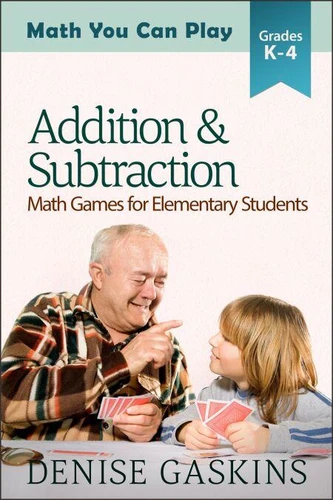
Addition & Subtraction. Math You Can Play, #2
Par :Formats :
Disponible dans votre compte client Decitre ou Furet du Nord dès validation de votre commande. Le format ePub est :
- Compatible avec une lecture sur My Vivlio (smartphone, tablette, ordinateur)
- Compatible avec une lecture sur liseuses Vivlio
- Pour les liseuses autres que Vivlio, vous devez utiliser le logiciel Adobe Digital Edition. Non compatible avec la lecture sur les liseuses Kindle, Remarkable et Sony
 , qui est-ce ?
Notre partenaire de plateforme de lecture numérique où vous retrouverez l'ensemble de vos ebooks gratuitement
Pour en savoir plus sur nos ebooks, consultez notre aide en ligne ici
C'est si simple ! Lisez votre ebook avec l'app Vivlio sur votre tablette, mobile ou ordinateur :

- FormatePub
- ISBN978-1-892083-26-5
- EAN9781892083265
- Date de parution20/04/2015
- Protection num.pas de protection
- Infos supplémentairesepub
- ÉditeurTabletop Academy Press
Résumé
Prevent math anxiety - by playing games!You'll love these math games because they give your child a sturdy foundation for understanding addition and subtraction. Help your child learn mental flexibility by playing with numbers, from basic math facts to the hundreds and thousands. Logic games build strategic thinking skills, and dice games give students hands-on experience with probability. Addition & Subtraction features 23 kid-tested games, offering a variety of challenges for elementary-age students.
Chapters include: . Tens and Teens: Master the concept of number bonds - the relationship between a whole number and the parts that combine to make it - and build a logical foundation for future math. . Numbers to One Hundred: Develop mental math skills for working with larger numbers. Practice using place value, addition, and subtraction. . Mixed Operations: Give mental muscles a workout with games that require number skills and logical thinking.
. Logic and Probability: Logic games sharpen inductive and deductive thinking skills, while games of chance build an intuition for probability. Math games protect your child from math phobia. Games pump up your child's mental muscle, reduce the fear of failure, and generate a positive attitude toward mathematics. Parents can use these games to enjoy quality time with your children. Classroom teachers like them as warm-ups and learning center activities or for a relaxing review day at the end of a term.
If you are a tutor or homeschooler, make games a regular feature in your lesson plans to build your students' math skills. So what are you waiting for? Clear off a table, grab a deck of cards, and let's play some math!
Chapters include: . Tens and Teens: Master the concept of number bonds - the relationship between a whole number and the parts that combine to make it - and build a logical foundation for future math. . Numbers to One Hundred: Develop mental math skills for working with larger numbers. Practice using place value, addition, and subtraction. . Mixed Operations: Give mental muscles a workout with games that require number skills and logical thinking.
. Logic and Probability: Logic games sharpen inductive and deductive thinking skills, while games of chance build an intuition for probability. Math games protect your child from math phobia. Games pump up your child's mental muscle, reduce the fear of failure, and generate a positive attitude toward mathematics. Parents can use these games to enjoy quality time with your children. Classroom teachers like them as warm-ups and learning center activities or for a relaxing review day at the end of a term.
If you are a tutor or homeschooler, make games a regular feature in your lesson plans to build your students' math skills. So what are you waiting for? Clear off a table, grab a deck of cards, and let's play some math!
A propos de Denise Gaskins


9,99 €

2,99 €


8,99 €

6,49 €

8,99 €