
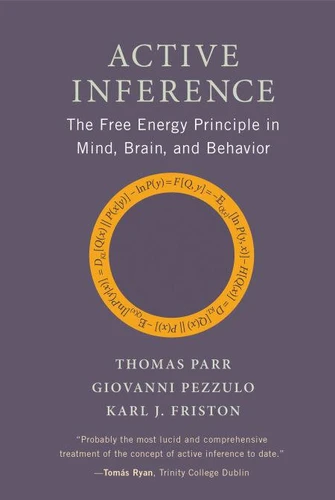
Active Inference. The Free Energy Principle in Mind, Brain, and Behavior
Par : , ,Formats :
Disponible dans votre compte client Decitre ou Furet du Nord dès validation de votre commande. Le format ePub protégé est :
- Compatible avec une lecture sur My Vivlio (smartphone, tablette, ordinateur)
- Compatible avec une lecture sur liseuses Vivlio
- Pour les liseuses autres que Vivlio, vous devez utiliser le logiciel Adobe Digital Edition. Non compatible avec la lecture sur les liseuses Kindle, Remarkable et Sony
- Non compatible avec un achat hors France métropolitaine
 , qui est-ce ?
Notre partenaire de plateforme de lecture numérique où vous retrouverez l'ensemble de vos ebooks gratuitement
Pour en savoir plus sur nos ebooks, consultez notre aide en ligne ici
C'est si simple ! Lisez votre ebook avec l'app Vivlio sur votre tablette, mobile ou ordinateur :

- Nombre de pages312
- FormatePub
- ISBN978-0-262-36228-3
- EAN9780262362283
- Date de parution29/03/2022
- Protection num.Adobe DRM
- Taille12 Mo
- Infos supplémentairesepub
- ÉditeurThe MIT Press
Résumé
The first comprehensive treatment of active inference, an integrative perspective on brain, cognition, and behavior used across multiple disciplines. Active inference is a way of understanding sentient behavior-a theory that characterizes perception, planning, and action in terms of probabilistic inference. Developed by theoretical neuroscientist Karl Friston over years of groundbreaking research, active inference provides an integrated perspective on brain, cognition, and behavior that is increasingly used across multiple disciplines including neuroscience, psychology, and philosophy.
Active inference puts the action into perception. This book offers the first comprehensive treatment of active inference, covering theory, applications, and cognitive domains. Active inference is a "first principles" approach to understanding behavior and the brain, framed in terms of a single imperative to minimize free energy. The book emphasizes the implications of the free energy principle for understanding how the brain works.
It first introduces active inference both conceptually and formally, contextualizing it within current theories of cognition. It then provides specific examples of computational models that use active inference to explain such cognitive phenomena as perception, attention, memory, and planning.
Active inference puts the action into perception. This book offers the first comprehensive treatment of active inference, covering theory, applications, and cognitive domains. Active inference is a "first principles" approach to understanding behavior and the brain, framed in terms of a single imperative to minimize free energy. The book emphasizes the implications of the free energy principle for understanding how the brain works.
It first introduces active inference both conceptually and formally, contextualizing it within current theories of cognition. It then provides specific examples of computational models that use active inference to explain such cognitive phenomena as perception, attention, memory, and planning.