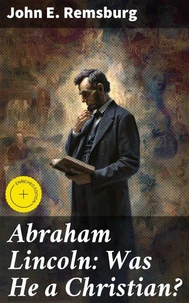
Abraham Lincoln: Was He a Christian?
Par :Formats :
Disponible dans votre compte client Decitre ou Furet du Nord dès validation de votre commande. Le format ePub est :
- Compatible avec une lecture sur My Vivlio (smartphone, tablette, ordinateur)
- Compatible avec une lecture sur liseuses Vivlio
- Pour les liseuses autres que Vivlio, vous devez utiliser le logiciel Adobe Digital Edition. Non compatible avec la lecture sur les liseuses Kindle, Remarkable et Sony
 , qui est-ce ?
Notre partenaire de plateforme de lecture numérique où vous retrouverez l'ensemble de vos ebooks gratuitement
Pour en savoir plus sur nos ebooks, consultez notre aide en ligne ici
C'est si simple ! Lisez votre ebook avec l'app Vivlio sur votre tablette, mobile ou ordinateur :

- Nombre de pages180
- FormatePub
- ISBN859-65--4731149-2
- EAN8596547311492
- Date de parution15/09/2022
- Protection num.Digital Watermarking
- Taille403 Ko
- Infos supplémentairesepub
- ÉditeurDIGICAT
Résumé
In "Abraham Lincoln: Was He a Christian?", John E. Remsburg delves into the intricate spiritual landscape of America's sixteenth president through a rigorous examination of historical evidence, theological writings, and contemporary interpretations. Written in a clear, scholarly style yet accessible to the general reader, the book questions the prevailing narratives surrounding Lincoln's faith, offering nuanced analyses that reflect the dynamic interplay between religion and politics in the 19th century.
Remsburg situates Lincoln within the broader context of religious thought and skepticism of the time, engaging with various religious discourses and their societal impacts. John E. Remsburg, a notable rationalist and a prominent figure in the religious skepticism movement of his era, brings a unique perspective to this inquiry. His background in philosophy and history, combined with personal experiences of religious skepticism, inform his exploration of Lincoln's life and beliefs.
Remsburg's commitment to critical inquiry pushes him to dissect myths surrounding Lincoln's piety and illuminates the secular dimensions of his moral philosophy, reflecting a larger dialogue about faith in public life. This book is essential for readers seeking to understand not just Lincoln's personal beliefs but also the broader implications of religion in American history. Remsburg's work invites individuals to grapple with the complexities of faith, identity, and morality, making it a compelling read for historians, theologians, and general readers alike.
Remsburg situates Lincoln within the broader context of religious thought and skepticism of the time, engaging with various religious discourses and their societal impacts. John E. Remsburg, a notable rationalist and a prominent figure in the religious skepticism movement of his era, brings a unique perspective to this inquiry. His background in philosophy and history, combined with personal experiences of religious skepticism, inform his exploration of Lincoln's life and beliefs.
Remsburg's commitment to critical inquiry pushes him to dissect myths surrounding Lincoln's piety and illuminates the secular dimensions of his moral philosophy, reflecting a larger dialogue about faith in public life. This book is essential for readers seeking to understand not just Lincoln's personal beliefs but also the broader implications of religion in American history. Remsburg's work invites individuals to grapple with the complexities of faith, identity, and morality, making it a compelling read for historians, theologians, and general readers alike.