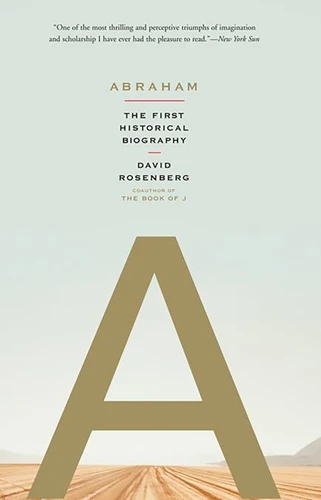
Abraham. The First Historical Biography
Par :Formats :
Disponible dans votre compte client Decitre ou Furet du Nord dès validation de votre commande. Le format ePub protégé est :
- Compatible avec une lecture sur My Vivlio (smartphone, tablette, ordinateur)
- Compatible avec une lecture sur liseuses Vivlio
- Pour les liseuses autres que Vivlio, vous devez utiliser le logiciel Adobe Digital Edition. Non compatible avec la lecture sur les liseuses Kindle, Remarkable et Sony
- Non compatible avec un achat hors France métropolitaine
 , qui est-ce ?
Notre partenaire de plateforme de lecture numérique où vous retrouverez l'ensemble de vos ebooks gratuitement
Pour en savoir plus sur nos ebooks, consultez notre aide en ligne ici
C'est si simple ! Lisez votre ebook avec l'app Vivlio sur votre tablette, mobile ou ordinateur :

- Nombre de pages304
- FormatePub
- ISBN978-0-7867-3394-1
- EAN9780786733941
- Date de parution24/03/2009
- Protection num.Adobe DRM
- Infos supplémentairesepub
- ÉditeurBasic Books
Résumé
The world's major religions-Judaism, Christianity, and Islam-find a common root in one man: Abraham. Yet Abraham looms so large in the realm of world religions that he has remained a ward of the Divine rather than a flesh-and-blood citizen of Humanity. In his monumental new book, David Rosenberg provides a long-overdue history of the patriarch; while revealing that the original story embedded in the Bible is actually our oldest historical biography.
We also discover that the wandering ascetic of tradition cannot explain our deep-seated feelings for Abraham and his God. The road that Abraham traveled was marked by signs of civilization that we still recognize: libraries, museums, hotels, and houses of worship. He is a sophisticated, educated Sumerian; an artisan who became the first Jew. Moreover, through Rosenberg's audacious translation of the Abraham story from Genesis, we learn that many of the core tenets of the monotheistic tradition-the idea of God's covenant and the soul-are Sumerian in origin.
Rosenberg first finds Abraham at his father's workshop in the cosmopolitan city of ancient Ur and follows his journey through what is today the Middle East. What kind of baggage-emotional, material, and spiritual-would Abraham have taken with him on his migration to a new land? Abraham does more than present a founding spiritual figure and his dynamic relationships with father, wife, and son. We witness this man as he transforms his heritage into an anxious embrace of religion with secular culture-the human condition in which we are still enfolded today.
We also discover that the wandering ascetic of tradition cannot explain our deep-seated feelings for Abraham and his God. The road that Abraham traveled was marked by signs of civilization that we still recognize: libraries, museums, hotels, and houses of worship. He is a sophisticated, educated Sumerian; an artisan who became the first Jew. Moreover, through Rosenberg's audacious translation of the Abraham story from Genesis, we learn that many of the core tenets of the monotheistic tradition-the idea of God's covenant and the soul-are Sumerian in origin.
Rosenberg first finds Abraham at his father's workshop in the cosmopolitan city of ancient Ur and follows his journey through what is today the Middle East. What kind of baggage-emotional, material, and spiritual-would Abraham have taken with him on his migration to a new land? Abraham does more than present a founding spiritual figure and his dynamic relationships with father, wife, and son. We witness this man as he transforms his heritage into an anxious embrace of religion with secular culture-the human condition in which we are still enfolded today.
A propos de David Rosenberg
15,69 €
14,71 €

Miguel Chevalier
Beau Livre
39,00 €

Umberto Mariani
Beau Livre
48,00 €

Manal Rachdi. OXO Architectes
Grand Format
39,00 €

Pascal Haudressy
Beau Livre
39,00 €
L'Atlas
Beau Livre
39,00 €

Renk. Always the sky
Beau Livre
42,00 €

Young-Sé Lee
Grand Format
35,00 €