SOLDES
Jusqu'à -70% sur une sélection d'articles*

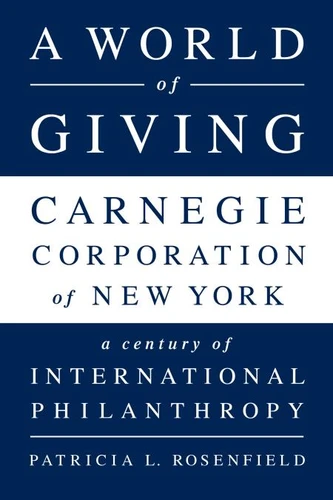
A World of Giving. Carnegie Corporation of New York-A Century of International Philanthropy
Par :Formats :
Disponible dans votre compte client Decitre ou Furet du Nord dès validation de votre commande. Le format ePub protégé est :
- Compatible avec une lecture sur My Vivlio (smartphone, tablette, ordinateur)
- Compatible avec une lecture sur liseuses Vivlio
- Pour les liseuses autres que Vivlio, vous devez utiliser le logiciel Adobe Digital Edition. Non compatible avec la lecture sur les liseuses Kindle, Remarkable et Sony
- Non compatible avec un achat hors France métropolitaine
 , qui est-ce ?
Notre partenaire de plateforme de lecture numérique où vous retrouverez l'ensemble de vos ebooks gratuitement
Pour en savoir plus sur nos ebooks, consultez notre aide en ligne ici
C'est si simple ! Lisez votre ebook avec l'app Vivlio sur votre tablette, mobile ou ordinateur :

- Nombre de pages752
- FormatePub
- ISBN978-1-61039-430-7
- EAN9781610394307
- Date de parution03/11/2014
- Protection num.Adobe DRM
- Infos supplémentairesepub
- ÉditeurPublicAffairs
Résumé
The age of international philanthropy is upon us. Today, many of America's most prominent foundations support institutions or programs abroad, but few have been active on the global stage for as long as Carnegie Corporation of New York. A World of Giving provides a thorough, objective examination of the international activities of Carnegie Corporation, one of America's oldest and most respected philanthropic institutions, which was created by steel baron Andrew Carnegie in 1911 to support the "advancement and diffusion of knowledge and understanding." The book explains in detail the grantmaking process aimed at promoting understanding across cultures and research in many nations across the world.
A World of Giving highlights the vital importance of Carnegie Corporation's mission in guiding its work, and the role of foundation presidents as thought and action leaders. The presidents, trustees, and later on, staff members, are the human element that drives philanthropy and they are the lens through which to view the inner workings of philanthropic institutions, with all of their accompanying strengths and limitations, especially when embarking on international activities.
It also does not shy away from controversy, including early missteps in Canada, race and poverty issues in the 1930s and 1980s related to South Africa, promotion of area studies affected by the McCarthy Era, the critique of technical assistance in developing countries, the century-long failure to achieve international understanding on the part of Americans, and recent critiques by Australian historians of the Corporation's nation-transforming work there.
This is a comprehensive review of one foundation's work on the international stage as well as a model for how philanthropy can be practiced in a deeply interconnected world where conflicts abound, but progress can be spurred by thoughtful, forward-looking institutions following humanistic principles.
A World of Giving highlights the vital importance of Carnegie Corporation's mission in guiding its work, and the role of foundation presidents as thought and action leaders. The presidents, trustees, and later on, staff members, are the human element that drives philanthropy and they are the lens through which to view the inner workings of philanthropic institutions, with all of their accompanying strengths and limitations, especially when embarking on international activities.
It also does not shy away from controversy, including early missteps in Canada, race and poverty issues in the 1930s and 1980s related to South Africa, promotion of area studies affected by the McCarthy Era, the critique of technical assistance in developing countries, the century-long failure to achieve international understanding on the part of Americans, and recent critiques by Australian historians of the Corporation's nation-transforming work there.
This is a comprehensive review of one foundation's work on the international stage as well as a model for how philanthropy can be practiced in a deeply interconnected world where conflicts abound, but progress can be spurred by thoughtful, forward-looking institutions following humanistic principles.