
Nouveauté
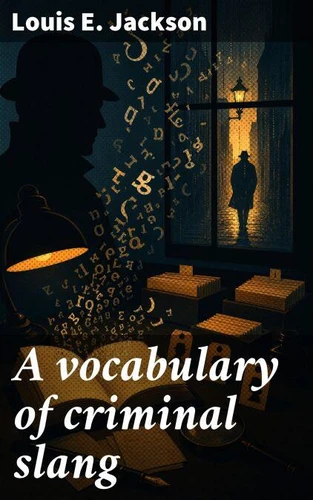
A vocabulary of criminal slang. With some examples of common usages
Par :Formats :
Disponible dans votre compte client Decitre ou Furet du Nord dès validation de votre commande. Le format ePub est :
- Compatible avec une lecture sur My Vivlio (smartphone, tablette, ordinateur)
- Compatible avec une lecture sur liseuses Vivlio
- Pour les liseuses autres que Vivlio, vous devez utiliser le logiciel Adobe Digital Edition. Non compatible avec la lecture sur les liseuses Kindle, Remarkable et Sony
 , qui est-ce ?
Notre partenaire de plateforme de lecture numérique où vous retrouverez l'ensemble de vos ebooks gratuitement
Pour en savoir plus sur nos ebooks, consultez notre aide en ligne ici
C'est si simple ! Lisez votre ebook avec l'app Vivlio sur votre tablette, mobile ou ordinateur :

- Nombre de pages56
- FormatePub
- ISBN859-65--4790985-9
- EAN8596547909859
- Date de parution29/06/2026
- Protection num.Digital Watermarking
- Taille936 Ko
- Infos supplémentairesepub
- ÉditeurGOOD PRESS
Résumé
Louis E. Jackson's A vocabulary of criminal slang: with some examples of common usages is a compact yet revealing lexical study of the language of the underworld, cataloguing the specialized expressions, idioms, and verbal habits associated with criminal subcultures. Part glossary and part social document, the book belongs to the long tradition of criminological and philological inquiry into cant, argot, and nonstandard speech.
Its method is practical and documentary: definitions are paired with examples of usage, allowing readers to see how slang functions not merely as ornament but as a marker of identity, secrecy, and social organization. Jackson writes from an informed engagement with the world he describes, and the book reflects the early twentieth-century interest in criminal anthropology, police work, and the scientific classification of deviance.
His attention to vocabulary suggests a belief that language offers privileged access to hidden communities and their codes. In this sense, the work emerges at the intersection of lexicography, criminology, and social observation. This volume is especially recommended to readers interested in the history of slang, criminal justice, sociolinguistics, and the cultural archaeology of marginalized groups.
Beyond its immediate reference value, it preserves a linguistic record of voices often excluded from formal literature and official history.
Its method is practical and documentary: definitions are paired with examples of usage, allowing readers to see how slang functions not merely as ornament but as a marker of identity, secrecy, and social organization. Jackson writes from an informed engagement with the world he describes, and the book reflects the early twentieth-century interest in criminal anthropology, police work, and the scientific classification of deviance.
His attention to vocabulary suggests a belief that language offers privileged access to hidden communities and their codes. In this sense, the work emerges at the intersection of lexicography, criminology, and social observation. This volume is especially recommended to readers interested in the history of slang, criminal justice, sociolinguistics, and the cultural archaeology of marginalized groups.
Beyond its immediate reference value, it preserves a linguistic record of voices often excluded from formal literature and official history.