
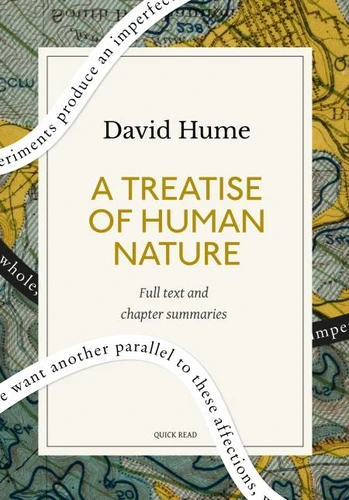
A Treatise of Human Nature: A Quick Read edition
Par : ,Formats :
Disponible dans votre compte client Decitre ou Furet du Nord dès validation de votre commande. Le format Multi-format est :
- Pour les liseuses autres que Vivlio, vous devez utiliser le logiciel Adobe Digital Edition. Non compatible avec la lecture sur les liseuses Kindle, Remarkable et Sony
 , qui est-ce ?
Notre partenaire de plateforme de lecture numérique où vous retrouverez l'ensemble de vos ebooks gratuitement
Pour en savoir plus sur nos ebooks, consultez notre aide en ligne ici
C'est si simple ! Lisez votre ebook avec l'app Vivlio sur votre tablette, mobile ou ordinateur :

- FormatMulti-format
- ISBN978-2-38582-183-8
- EAN9782385821838
- Date de parution16/02/2024
- Protection num.pas de protection
- Infos supplémentairesMulti-Format
- ÉditeurQuick Read
Résumé
Discover a new way to read classics with Quick Read.
This Quick Read edition includes both the full text and a summary for each chapter.
- Reading time of the complete text: about 21 hours
- Reading time of the summarized text: about 1 hour
In "A Treatise of Human Nature, " Hume explores the nature of human perception and reasoning. He distinguishes between impressions (forceful perceptions) and ideas (faint perceptions).
Impressions can be of sensation or reflection, while ideas can be of memory or imagination. Hume argues that our mistaken ideas often come from confusing experiences. He also discusses the influence of emotions on our perceptions and beliefs. Hume compares human reason with animal reason and rejects the concept of substance. He explores various passions, such as pride, love, and hatred, and how they are influenced by impressions and ideas.
Hume also examines the connection between virtue and utility, arguing that sympathy plays a significant role in moral evaluation. He concludes by discussing the importance of justice and the stability of moral principles.
Impressions can be of sensation or reflection, while ideas can be of memory or imagination. Hume argues that our mistaken ideas often come from confusing experiences. He also discusses the influence of emotions on our perceptions and beliefs. Hume compares human reason with animal reason and rejects the concept of substance. He explores various passions, such as pride, love, and hatred, and how they are influenced by impressions and ideas.
Hume also examines the connection between virtue and utility, arguing that sympathy plays a significant role in moral evaluation. He concludes by discussing the importance of justice and the stability of moral principles.
A propos de Quick Read
4,99 €
4,99 €


4,99 €

4,99 €
4,99 €
4,99 €
4,99 €
4,99 €
4,99 €

4,99 €

4,99 €
4,99 €

4,99 €
4,99 €