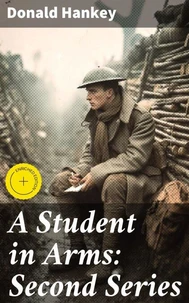
A Student in Arms: Second Series
Par :Formats :
Disponible dans votre compte client Decitre ou Furet du Nord dès validation de votre commande. Le format ePub est :
- Compatible avec une lecture sur My Vivlio (smartphone, tablette, ordinateur)
- Compatible avec une lecture sur liseuses Vivlio
- Pour les liseuses autres que Vivlio, vous devez utiliser le logiciel Adobe Digital Edition. Non compatible avec la lecture sur les liseuses Kindle, Remarkable et Sony
 , qui est-ce ?
Notre partenaire de plateforme de lecture numérique où vous retrouverez l'ensemble de vos ebooks gratuitement
Pour en savoir plus sur nos ebooks, consultez notre aide en ligne ici
C'est si simple ! Lisez votre ebook avec l'app Vivlio sur votre tablette, mobile ou ordinateur :

- Nombre de pages76
- FormatePub
- ISBN859-65--4737991-1
- EAN8596547379911
- Date de parution16/09/2022
- Protection num.Digital Watermarking
- Taille340 Ko
- Infos supplémentairesepub
- ÉditeurDIGICAT
Résumé
In "A Student in Arms: Second Series, " Donald Hankey presents a poignant exploration of the complexities of warfare and the psychological landscape of a soldier's life during World War I. Through a series of reflective essays, Hankey employs a lyrical yet unflinchingly honest prose style that captures both the camaraderie and the chaos inherent in battle. His vivid descriptions and introspective narratives delve into themes of duty, sacrifice, and the moral quandaries faced by young men in an age defined by conflict, situating the work firmly within the literary canon of war literature and the broader discourse of pacifism prevalent during his time.
Donald Hankey, known for his unique perspective as both a soldier and a scholar, was deeply influenced by his experiences in the Great War. His dual identity as an educator and combatant provided him with the insight to articulate the inner turmoil many soldiers faced, bridging the gap between the romantic notions of valor and the harsh realities of the battlefield. Hankey's commitment to peace and understanding of human emotions underscored his writing, making it an important contribution to both war literature and anti-war sentiment.
Readers seeking a nuanced understanding of World War I through a personal lens will find "A Student in Arms: Second Series" to be an enlightening and profound read. Hankey's reflections resonate with contemporary themes of conflict and morality, making this collection not only relevant to historical discourse but also to modern readers grappling with the echoes of war in society.
Donald Hankey, known for his unique perspective as both a soldier and a scholar, was deeply influenced by his experiences in the Great War. His dual identity as an educator and combatant provided him with the insight to articulate the inner turmoil many soldiers faced, bridging the gap between the romantic notions of valor and the harsh realities of the battlefield. Hankey's commitment to peace and understanding of human emotions underscored his writing, making it an important contribution to both war literature and anti-war sentiment.
Readers seeking a nuanced understanding of World War I through a personal lens will find "A Student in Arms: Second Series" to be an enlightening and profound read. Hankey's reflections resonate with contemporary themes of conflict and morality, making this collection not only relevant to historical discourse but also to modern readers grappling with the echoes of war in society.