SOLDES
Jusqu'à -70% sur une sélection d'articles*

Nouveauté
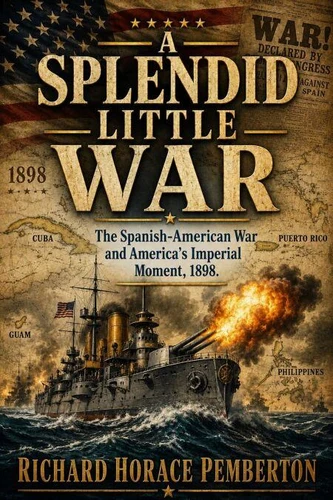
A SPLENDID LITTLE WAR. The Spanish-American War and America's Imperial Moment, 1898
Par :Formats :
Disponible dans votre compte client Decitre ou Furet du Nord dès validation de votre commande. Le format ePub est :
- Compatible avec une lecture sur My Vivlio (smartphone, tablette, ordinateur)
- Compatible avec une lecture sur liseuses Vivlio
- Pour les liseuses autres que Vivlio, vous devez utiliser le logiciel Adobe Digital Edition. Non compatible avec la lecture sur les liseuses Kindle, Remarkable et Sony
 , qui est-ce ?
Notre partenaire de plateforme de lecture numérique où vous retrouverez l'ensemble de vos ebooks gratuitement
Pour en savoir plus sur nos ebooks, consultez notre aide en ligne ici
C'est si simple ! Lisez votre ebook avec l'app Vivlio sur votre tablette, mobile ou ordinateur :

- FormatePub
- ISBN8905168697
- EAN9798905168697
- Date de parution03/06/2026
- Protection num.pas de protection
- Taille1 Mo
- Infos supplémentairesepub
- ÉditeurChiify
Résumé
The complete narrative history of the Spanish-American War - Theodore Roosevelt, Dewey at Manila Bay, the Rough Riders, the Filipino betrayal, and the untold story of America's imperial moment, 1898.
On February 15, 1898, the battleship Maine exploded in Havana Harbor - 266 men killed, cause never definitively established. In 1898, neither the press nor the public was in the mood for ambiguity.
"Remember the Maine, to Hell with Spain" became the rallying cry of a nation building toward war for a decade, and Secretary of State John Hay's four-month conflict produced something neither Spain nor America expected: an empire. In this Spanish-American War history, historian Richard Horace Pemberton follows the full arc of America's imperial moment - from José Martí's Cuban independence struggle and Hearst's yellow journalism machine, through Dewey's destruction of the Spanish Pacific fleet at Manila Bay and the Rough Riders' charge up Kettle Hill, to the Philippine-American War that followed.
Central figures include Theodore Roosevelt, Commodore George Dewey, Emilio Aguinaldo, the Buffalo Soldiers of the Ninth and Tenth Cavalry, and the Filipino independence movement that won a revolution and lost a country in the same year. Inside this Spanish-American War history: The yellow journalism machine - how Hearst's New York Journal manufactured the moral case for war: the Evangelina Cisneros rescue staged for circulation, banner headlines declaring Spanish treachery before any evidence was gathered (Chapter 2) Dewey's seven-hour victory - at 5:41 a.m.
on May 1, 1898, Dewey ordered "You may fire when you are ready, Gridley." Seven hours later, 381 Spanish sailors were dead, the Pacific fleet destroyed, and not a single American life lost in battle (Chapter 9) The Rough Riders at Kettle Hill - Roosevelt on Little Texas, leading 490 men across an open meadow under Mauser fire, 86 casualties in one afternoon - the war's defining image and the launch of a presidential career (Chapter 6) The betrayal of Aguinaldo - Dewey returned the Philippine revolutionary to his homeland, encouraged him to believe independence was coming, then watched the Treaty of Paris sell ten million Filipinos to the United States for twenty million dollars (Chapters 10, 13) The Buffalo Soldiers' forgotten war - the Black regulars of the Ninth and Tenth Cavalry who fought alongside the Rough Riders at San Juan Heights, whose performance was decisive, and who received a fraction of the glory (Chapter 19) The splendid little war lasted four months.
The empire it produced - the Philippines, Guam, Puerto Rico, a protectorate over Cuba - lasted for decades. The questions it raised about American power, imperial responsibility, and the distance between proclaimed values and practiced interests have never been fully answered. For readers of David Traxel's 1898: THE BIRTH OF THE AMERICAN CENTURY and Ivan Musicant's EMPIRE BY DEFAULT.
"Remember the Maine, to Hell with Spain" became the rallying cry of a nation building toward war for a decade, and Secretary of State John Hay's four-month conflict produced something neither Spain nor America expected: an empire. In this Spanish-American War history, historian Richard Horace Pemberton follows the full arc of America's imperial moment - from José Martí's Cuban independence struggle and Hearst's yellow journalism machine, through Dewey's destruction of the Spanish Pacific fleet at Manila Bay and the Rough Riders' charge up Kettle Hill, to the Philippine-American War that followed.
Central figures include Theodore Roosevelt, Commodore George Dewey, Emilio Aguinaldo, the Buffalo Soldiers of the Ninth and Tenth Cavalry, and the Filipino independence movement that won a revolution and lost a country in the same year. Inside this Spanish-American War history: The yellow journalism machine - how Hearst's New York Journal manufactured the moral case for war: the Evangelina Cisneros rescue staged for circulation, banner headlines declaring Spanish treachery before any evidence was gathered (Chapter 2) Dewey's seven-hour victory - at 5:41 a.m.
on May 1, 1898, Dewey ordered "You may fire when you are ready, Gridley." Seven hours later, 381 Spanish sailors were dead, the Pacific fleet destroyed, and not a single American life lost in battle (Chapter 9) The Rough Riders at Kettle Hill - Roosevelt on Little Texas, leading 490 men across an open meadow under Mauser fire, 86 casualties in one afternoon - the war's defining image and the launch of a presidential career (Chapter 6) The betrayal of Aguinaldo - Dewey returned the Philippine revolutionary to his homeland, encouraged him to believe independence was coming, then watched the Treaty of Paris sell ten million Filipinos to the United States for twenty million dollars (Chapters 10, 13) The Buffalo Soldiers' forgotten war - the Black regulars of the Ninth and Tenth Cavalry who fought alongside the Rough Riders at San Juan Heights, whose performance was decisive, and who received a fraction of the glory (Chapter 19) The splendid little war lasted four months.
The empire it produced - the Philippines, Guam, Puerto Rico, a protectorate over Cuba - lasted for decades. The questions it raised about American power, imperial responsibility, and the distance between proclaimed values and practiced interests have never been fully answered. For readers of David Traxel's 1898: THE BIRTH OF THE AMERICAN CENTURY and Ivan Musicant's EMPIRE BY DEFAULT.