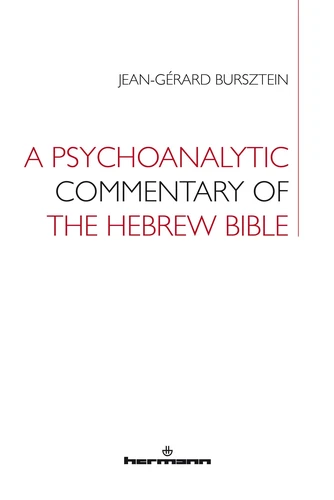
The object of the Hebrew Bible supports what it calls choosing life in a collective that it names Israel. It supports mixing subjective existence in a society which envisages justice, tsedeq, and symbolic fraternity, society governed by alliance, brith. This mixing obliges everyone to be on guard against incest and of its impure atmosphere, which annuls the subject. The latter, by not sacrificing prohibited jouissance, by not expiating the faults engendered by guilt, by accepting an impure atmosphere of incest, toum'ah, would be choosing death which would then confine him in a veil of sadness and of renunciation of desire.
Incest from the point of view of the social link, reflects a desire for death, an attempt by fantasy to fuse with the big Other.
The Bible such that the author interprets it is a writing of political philosophy in the ancient sense, politeia, mixing rules, positive laws and unconscious symbolic Law for the constitution of a people.
Translated by Richard Klein, Nicolas Testé and Jennifer Yusin
The object of the Hebrew Bible supports what it calls choosing life in a collective that it names Israel. It supports mixing subjective existence in a society which envisages justice, tsedeq, and symbolic fraternity, society governed by alliance, brith. This mixing obliges everyone to be on guard against incest and of its impure atmosphere, which annuls the subject. The latter, by not sacrificing prohibited jouissance, by not expiating the faults engendered by guilt, by accepting an impure atmosphere of incest, toum'ah, would be choosing death which would then confine him in a veil of sadness and of renunciation of desire.
Incest from the point of view of the social link, reflects a desire for death, an attempt by fantasy to fuse with the big Other.
The Bible such that the author interprets it is a writing of political philosophy in the ancient sense, politeia, mixing rules, positive laws and unconscious symbolic Law for the constitution of a people.
Translated by Richard Klein, Nicolas Testé and Jennifer Yusin


 , qui est-ce ?