SOLDES
Jusqu'à -70% sur une sélection d'articles*

Nouveauté
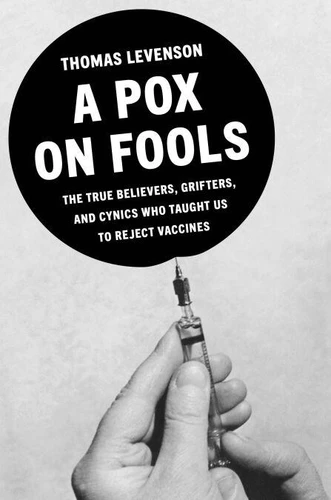
A Pox on Fools. The True Believers, Grifters, and Cynics Who Convinced Us to Reject Vaccines
Par :Formats :
Disponible dans votre compte client Decitre ou Furet du Nord dès validation de votre commande. Le format ePub protégé est :
- Compatible avec une lecture sur My Vivlio (smartphone, tablette, ordinateur)
- Compatible avec une lecture sur liseuses Vivlio
- Pour les liseuses autres que Vivlio, vous devez utiliser le logiciel Adobe Digital Edition. Non compatible avec la lecture sur les liseuses Kindle, Remarkable et Sony
- Non compatible avec un achat hors France métropolitaine
 , qui est-ce ?
Notre partenaire de plateforme de lecture numérique où vous retrouverez l'ensemble de vos ebooks gratuitement
Pour en savoir plus sur nos ebooks, consultez notre aide en ligne ici
C'est si simple ! Lisez votre ebook avec l'app Vivlio sur votre tablette, mobile ou ordinateur :

- Nombre de pages208
- FormatePub
- ISBN8217155026
- EAN9798217155026
- Date de parution09/06/2026
- Protection num.Adobe DRM
- Taille5 Mo
- Infos supplémentairesepub
- ÉditeurRandom House
Résumé
An urgent and profound history of vaccine skepticism, seeking to understand how our three most common fears about vaccines hardened into a lethal ideology-from a leading science writer"Brimming with righteous anger, this book should infuriate you for all the right reasons, and arm you to take on the grifters and their war against science."-Adam Rutherford, author of A Brief History of Everyone Who Ever Lived: The Human Story Retold Through Our GenesSince the advent of smallpox inoculation in the eighteenth century, the idea that a disease introduced to the body in some lesser, weakened form might prevent full-blown infection has been one of the greatest public health insights of the modern era, inspiring the invention of numerous vaccines and saving countless human lives.
But, just as humanity acquired the god-like power to stop infectious disease in its tracks, some feared we had gone too far, leading to the skepticism that has hijacked public health discourse today. In three sweeping essays written for our current moment of scientific mistrust, Thomas Levenson searches for the origins of the most common arguments against vaccines: that they are unnatural; that they are more dangerous than the illnesses they claim to prevent; and that they are an affront to freedom.
Each arose from the earliest development of particular vaccines and the campaigns to distribute them. Even as the pattern repeats, Levenson reveals how innocent that skepticism initially was and, in each case, how very human fears and questions ultimately turned into something darker, where no truth would be enough to overcome the doubt. Searing but ultimately empathetic, A Pox on Fools explores the human impulse to question and wonder-sometimes past the point at which the very act of questioning turns deadly.
But, just as humanity acquired the god-like power to stop infectious disease in its tracks, some feared we had gone too far, leading to the skepticism that has hijacked public health discourse today. In three sweeping essays written for our current moment of scientific mistrust, Thomas Levenson searches for the origins of the most common arguments against vaccines: that they are unnatural; that they are more dangerous than the illnesses they claim to prevent; and that they are an affront to freedom.
Each arose from the earliest development of particular vaccines and the campaigns to distribute them. Even as the pattern repeats, Levenson reveals how innocent that skepticism initially was and, in each case, how very human fears and questions ultimately turned into something darker, where no truth would be enough to overcome the doubt. Searing but ultimately empathetic, A Pox on Fools explores the human impulse to question and wonder-sometimes past the point at which the very act of questioning turns deadly.
A propos de Thomas Levenson

Einstein in Berlin
E-book
6,90 €