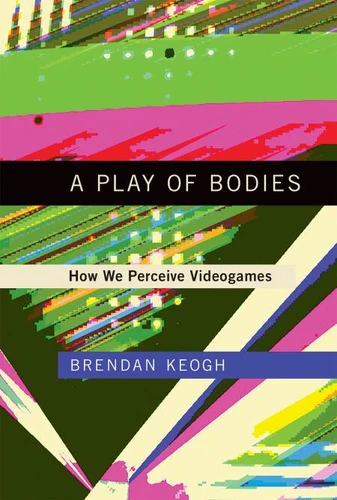
A Play of Bodies. How we Perceive Videogames
Par :Formats :
Disponible dans votre compte client Decitre ou Furet du Nord dès validation de votre commande. Le format ePub protégé est :
- Compatible avec une lecture sur My Vivlio (smartphone, tablette, ordinateur)
- Compatible avec une lecture sur liseuses Vivlio
- Pour les liseuses autres que Vivlio, vous devez utiliser le logiciel Adobe Digital Edition. Non compatible avec la lecture sur les liseuses Kindle, Remarkable et Sony
- Non compatible avec un achat hors France métropolitaine
 , qui est-ce ?
Notre partenaire de plateforme de lecture numérique où vous retrouverez l'ensemble de vos ebooks gratuitement
Pour en savoir plus sur nos ebooks, consultez notre aide en ligne ici
C'est si simple ! Lisez votre ebook avec l'app Vivlio sur votre tablette, mobile ou ordinateur :

- Nombre de pages248
- FormatePub
- ISBN978-0-262-34544-6
- EAN9780262345446
- Date de parution06/04/2018
- Protection num.Adobe DRM
- Taille2 Mo
- Infos supplémentairesepub
- ÉditeurThe MIT Press
Résumé
An investigation of the embodied engagement between the playing body and the videogame: how player and game incorporate each other. Our bodies engage with videogames in complex and fascinating ways. Through an entanglement of eyes-on-screens, ears-at-speakers, and muscles-against-interfaces, we experience games with our senses. But, as Brendan Keogh argues in A Play of Bodies, this corporal engagement goes both ways; as we touch the videogame, it touches back, augmenting the very senses with which we perceive.
Keogh investigates this merging of actual and virtual bodies and worlds, asking how our embodied sense of perception constitutes, and becomes constituted by, the phenomenon of videogame play. In short, how do we perceive videogames?Keogh works toward formulating a phenomenology of videogame experience, focusing on what happens in the embodied engagement between the playing body and the videogame, and anchoring his analysis in an eclectic series of games that range from mainstream to niche titles.
Considering smartphone videogames, he proposes a notion of co-attentiveness to understand how players can feel present in a virtual world without forgetting that they are touching a screen in the actual world. He discusses the somatic basis of videogame play, whether games involve vigorous physical movement or quietly sitting on a couch with a controller; the sometimes overlooked visual and audible pleasures of videogame experience; and modes of temporality represented by character death, failure, and repetition.
Finally, he considers two metaphorical characters: the "hacker, " representing the hegemonic, masculine gamers concerned with control and configuration; and the "cyborg, " less concerned with control than with embodiment and incorporation.
Keogh investigates this merging of actual and virtual bodies and worlds, asking how our embodied sense of perception constitutes, and becomes constituted by, the phenomenon of videogame play. In short, how do we perceive videogames?Keogh works toward formulating a phenomenology of videogame experience, focusing on what happens in the embodied engagement between the playing body and the videogame, and anchoring his analysis in an eclectic series of games that range from mainstream to niche titles.
Considering smartphone videogames, he proposes a notion of co-attentiveness to understand how players can feel present in a virtual world without forgetting that they are touching a screen in the actual world. He discusses the somatic basis of videogame play, whether games involve vigorous physical movement or quietly sitting on a couch with a controller; the sometimes overlooked visual and audible pleasures of videogame experience; and modes of temporality represented by character death, failure, and repetition.
Finally, he considers two metaphorical characters: the "hacker, " representing the hegemonic, masculine gamers concerned with control and configuration; and the "cyborg, " less concerned with control than with embodiment and incorporation.