SOLDES
Jusqu'à -70% sur une sélection d'articles*

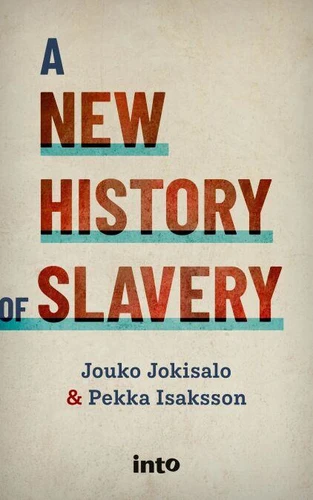
A New History of Slavery
Par : ,Formats :
Disponible dans votre compte client Decitre ou Furet du Nord dès validation de votre commande. Le format ePub est :
- Compatible avec une lecture sur My Vivlio (smartphone, tablette, ordinateur)
- Compatible avec une lecture sur liseuses Vivlio
- Pour les liseuses autres que Vivlio, vous devez utiliser le logiciel Adobe Digital Edition. Non compatible avec la lecture sur les liseuses Kindle, Remarkable et Sony
 , qui est-ce ?
Notre partenaire de plateforme de lecture numérique où vous retrouverez l'ensemble de vos ebooks gratuitement
Pour en savoir plus sur nos ebooks, consultez notre aide en ligne ici
C'est si simple ! Lisez votre ebook avec l'app Vivlio sur votre tablette, mobile ou ordinateur :

- FormatePub
- ISBN978-952-393-828-1
- EAN9789523938281
- Date de parution20/04/2026
- Protection num.pas de protection
- Infos supplémentairesepub
- ÉditeurInto Publishing
Résumé
Slavery in Europe and the Americas was not abolished by the enlightened popular movements. It was destroyed by the resistance and countless rebellions by the enslaved people. A New History of Slavery traces the institution of human bondage from antiquity to the present day, revealing how profoundly it has shaped global history and, above all, setting the record straight on how the horror of Atlantic slave trade was eliminated. The story of slavery's end has too often been told as a triumph of Christian morality or industrial progress.
The factor that has often been almost completely erased from histories, is the role of the enslaved themselves. A New History of Slavery restores their agency. Through rebellion, sabotage, escape, and everyday acts of defiance, enslaved people relentlessly resisted their oppression. Across North America alone, more than 300 slave uprisings erupted, with many more in the Caribbean and roughly one in every tenth ship that sailed from Africa towards the America with a cargo of slaves.
Every one of these thousands of rebellions was a declaration of humanity in the face of dehumanization. A New History of Slavery forces everybody to ask, whether the 1801 and 1805 constitutions of St Domingue/Haiti were only footnotes of history, or whether they should be considered equal or even more important universal steps in humanity's progress as the US constitution in 1776 and the French revolution in 1789.
Haiti's 1805 constitution was the history's first declaration of universal human rights. It was the first constitution saying that all humans are equal, independent of their ethnic background, religion or the amount of pigment in their skin. For these reasons it should perhaps be considered as the most important single legal document in world history. The writing of the groundbreaking declaration only became possible because Toussaint L'Ouverture, the military leader of Haiti's slave rebellion, also known as the Black Spartacus or as the Black Napoleon, one of the history's greatest military geniuses, defeated Europe's colonial powers in a violent confrontation.
In recent decades, historical scholarship has grown more inclusive and nuanced. Yet myths and distortions about slavery persist. A New History of Slavery confronts these falsehoods head-on, offering a clear-eyed, uncompromising account of slavery's past and present. From the slave societies of ancient Greece and Rome to the vast reach of Islamic slavery, slavery was expansive and enduring. Transatlantic slave trade, which forcibly transported millions of Africans to the Americas, stands as one of the gravest human rights crimes in history.
Yet in a chilling paradox, important thinkers of the Age of Enlightenment-celebrated for its ideals of liberty and reason-often framed slave ownership as a fundamental human right. Slavery is not a closed chapter of history. It is a deep, brutal wound whose scars still shape the world we live in. The issue has suddenly become more current and acute because even open and legalized slavery might make a comeback into the world via fundamentalist movements like Taliban and Boko Haram. "What is particularly good about A New History of Slavery is that the authors write about the enslaved as historical actors who did not resign themselves to their fate.
The abolition of slavery was not only the result of opposition from white abolitionists, but also of resistance from the enslaved themselves."- Kulttuuritoimitus
The factor that has often been almost completely erased from histories, is the role of the enslaved themselves. A New History of Slavery restores their agency. Through rebellion, sabotage, escape, and everyday acts of defiance, enslaved people relentlessly resisted their oppression. Across North America alone, more than 300 slave uprisings erupted, with many more in the Caribbean and roughly one in every tenth ship that sailed from Africa towards the America with a cargo of slaves.
Every one of these thousands of rebellions was a declaration of humanity in the face of dehumanization. A New History of Slavery forces everybody to ask, whether the 1801 and 1805 constitutions of St Domingue/Haiti were only footnotes of history, or whether they should be considered equal or even more important universal steps in humanity's progress as the US constitution in 1776 and the French revolution in 1789.
Haiti's 1805 constitution was the history's first declaration of universal human rights. It was the first constitution saying that all humans are equal, independent of their ethnic background, religion or the amount of pigment in their skin. For these reasons it should perhaps be considered as the most important single legal document in world history. The writing of the groundbreaking declaration only became possible because Toussaint L'Ouverture, the military leader of Haiti's slave rebellion, also known as the Black Spartacus or as the Black Napoleon, one of the history's greatest military geniuses, defeated Europe's colonial powers in a violent confrontation.
In recent decades, historical scholarship has grown more inclusive and nuanced. Yet myths and distortions about slavery persist. A New History of Slavery confronts these falsehoods head-on, offering a clear-eyed, uncompromising account of slavery's past and present. From the slave societies of ancient Greece and Rome to the vast reach of Islamic slavery, slavery was expansive and enduring. Transatlantic slave trade, which forcibly transported millions of Africans to the Americas, stands as one of the gravest human rights crimes in history.
Yet in a chilling paradox, important thinkers of the Age of Enlightenment-celebrated for its ideals of liberty and reason-often framed slave ownership as a fundamental human right. Slavery is not a closed chapter of history. It is a deep, brutal wound whose scars still shape the world we live in. The issue has suddenly become more current and acute because even open and legalized slavery might make a comeback into the world via fundamentalist movements like Taliban and Boko Haram. "What is particularly good about A New History of Slavery is that the authors write about the enslaved as historical actors who did not resign themselves to their fate.
The abolition of slavery was not only the result of opposition from white abolitionists, but also of resistance from the enslaved themselves."- Kulttuuritoimitus