SOLDES
Jusqu'à -70% sur une sélection d'articles*

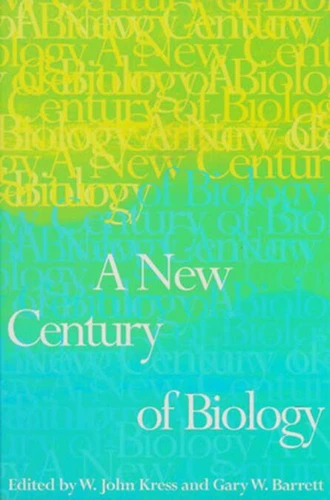
A New Century of Biology
Par : ,Formats :
Disponible dans votre compte client Decitre ou Furet du Nord dès validation de votre commande. Le format ePub protégé est :
- Compatible avec une lecture sur My Vivlio (smartphone, tablette, ordinateur)
- Compatible avec une lecture sur liseuses Vivlio
- Pour les liseuses autres que Vivlio, vous devez utiliser le logiciel Adobe Digital Edition. Non compatible avec la lecture sur les liseuses Kindle, Remarkable et Sony
- Non compatible avec un achat hors France métropolitaine
 , qui est-ce ?
Notre partenaire de plateforme de lecture numérique où vous retrouverez l'ensemble de vos ebooks gratuitement
Pour en savoir plus sur nos ebooks, consultez notre aide en ligne ici
C'est si simple ! Lisez votre ebook avec l'app Vivlio sur votre tablette, mobile ou ordinateur :

- Nombre de pages159
- FormatePub
- ISBN978-1-935623-90-8
- EAN9781935623908
- Date de parution02/02/2016
- Protection num.Adobe DRM
- Taille6 Mo
- Infos supplémentairesepub
- ÉditeurSmithsonian Institution Scholarl...
Résumé
In the twentieth century, scientists in the relatively new field of biology played an important role in exposing the threats of environmental degradation, loss of species diversity, habitat fragmentation, scarce energy resources, and human population growth. In the essays found in A New Century of Biology, some of the world's most notable biologists consider how their discipline must evolve to address these problems in the twenty-first century. The next one hundred years, the contributors argue, will likely be dominated by breakthroughs in evolutionary biology and systems ecology; by an increased need for scientists to integrate research, teaching, and service missions; and by problem-solving ventures on greater spatial and temporal scales.
Because human activity and increased population will continue to have a profound impact on the environment, biologists must define an effective strategy for integrating the biological sciences with global economics and human social structure. The eleven contributors are leaders in the fields of ecology, and evolution, morphology, and development, behavior, microbiology, ecosystem energetics and biogeochemistry, biodiversity and conservation biology, and human sciences.
While acknowledging the real problems their discipline must address, they offer an optimistic agenda for the future.
Because human activity and increased population will continue to have a profound impact on the environment, biologists must define an effective strategy for integrating the biological sciences with global economics and human social structure. The eleven contributors are leaders in the fields of ecology, and evolution, morphology, and development, behavior, microbiology, ecosystem energetics and biogeochemistry, biodiversity and conservation biology, and human sciences.
While acknowledging the real problems their discipline must address, they offer an optimistic agenda for the future.