SOLDES
Jusqu'à -70% sur une sélection d'articles*

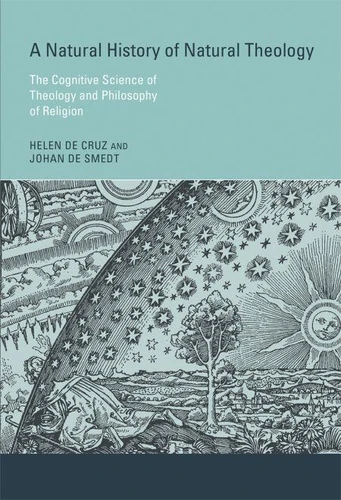
A Natural History of Natural Theology. The Cognitive Science of Theology and Philosophy of Religion
Par : ,Formats :
Disponible dans votre compte client Decitre ou Furet du Nord dès validation de votre commande. Le format ePub protégé est :
- Compatible avec une lecture sur My Vivlio (smartphone, tablette, ordinateur)
- Compatible avec une lecture sur liseuses Vivlio
- Pour les liseuses autres que Vivlio, vous devez utiliser le logiciel Adobe Digital Edition. Non compatible avec la lecture sur les liseuses Kindle, Remarkable et Sony
- Non compatible avec un achat hors France métropolitaine
 , qui est-ce ?
Notre partenaire de plateforme de lecture numérique où vous retrouverez l'ensemble de vos ebooks gratuitement
Pour en savoir plus sur nos ebooks, consultez notre aide en ligne ici
C'est si simple ! Lisez votre ebook avec l'app Vivlio sur votre tablette, mobile ou ordinateur :

- Nombre de pages264
- FormatePub
- ISBN978-0-262-32684-1
- EAN9780262326841
- Date de parution19/12/2014
- Protection num.Adobe DRM
- Taille878 Ko
- Infos supplémentairesepub
- ÉditeurThe MIT Press
Résumé
An examination of the cognitive foundations of intuitions about the existence and attributes of God. Questions about the existence and attributes of God form the subject matter of natural theology, which seeks to gain knowledge of the divine by relying on reason and experience of the world. Arguments in natural theology rely largely on intuitions and inferences that seem natural to us, occurring spontaneously-at the sight of a beautiful landscape, perhaps, or in wonderment at the complexity of the cosmos-even to a nonphilosopher.
In this book, Helen De Cruz and Johan De Smedt examine the cognitive origins of arguments in natural theology. They find that although natural theological arguments can be very sophisticated, they are rooted in everyday intuitions about purpose, causation, agency, and morality. Using evidence and theories from disciplines including the cognitive science of religion, evolutionary ethics, evolutionary aesthetics, and the cognitive science of testimony, they show that these intuitions emerge early in development and are a stable part of human cognition.
De Cruz and De Smedt analyze the cognitive underpinnings of five well-known arguments for the existence of God: the argument from design, the cosmological argument, the moral argument, the argument from beauty, and the argument from miracles. Finally, they consider whether the cognitive origins of these natural theological arguments should affect their rationality.
In this book, Helen De Cruz and Johan De Smedt examine the cognitive origins of arguments in natural theology. They find that although natural theological arguments can be very sophisticated, they are rooted in everyday intuitions about purpose, causation, agency, and morality. Using evidence and theories from disciplines including the cognitive science of religion, evolutionary ethics, evolutionary aesthetics, and the cognitive science of testimony, they show that these intuitions emerge early in development and are a stable part of human cognition.
De Cruz and De Smedt analyze the cognitive underpinnings of five well-known arguments for the existence of God: the argument from design, the cosmological argument, the moral argument, the argument from beauty, and the argument from miracles. Finally, they consider whether the cognitive origins of these natural theological arguments should affect their rationality.