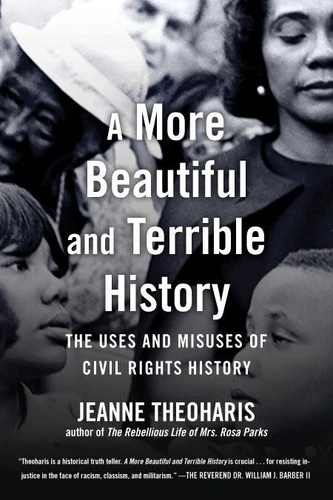
A More Beautiful and Terrible History. The Uses and Misuses of Civil Rights History
Par :Formats :
Disponible dans votre compte client Decitre ou Furet du Nord dès validation de votre commande. Le format ePub protégé est :
- Compatible avec une lecture sur My Vivlio (smartphone, tablette, ordinateur)
- Compatible avec une lecture sur liseuses Vivlio
- Pour les liseuses autres que Vivlio, vous devez utiliser le logiciel Adobe Digital Edition. Non compatible avec la lecture sur les liseuses Kindle, Remarkable et Sony
- Non compatible avec un achat hors France métropolitaine
 , qui est-ce ?
Notre partenaire de plateforme de lecture numérique où vous retrouverez l'ensemble de vos ebooks gratuitement
Pour en savoir plus sur nos ebooks, consultez notre aide en ligne ici
C'est si simple ! Lisez votre ebook avec l'app Vivlio sur votre tablette, mobile ou ordinateur :

- Nombre de pages288
- FormatePub
- ISBN978-0-8070-7588-3
- EAN9780807075883
- Date de parution30/01/2018
- Protection num.Adobe DRM
- Taille590 Ko
- Infos supplémentairesepub
- ÉditeurBeacon Press
Résumé
This "bracing corrective to national mythology" around the American civil rights movement "shows us how little we remember, and how much more there is to understand" (New York Times). "Theoharis's view of history is expansive" as it reveals the diverse, unsung heroes of the movement and criticizes the oversimplification of complex figures like Martin Luther King, Jr. (O Magazine). The civil rights movement has become national legend, lauded by presidents from Reagan to Obama to Trump, as proof of the power of American democracy.
This fable, featuring dreamy heroes and accidental heroines like Martin Luther King and Rosa Parks, anchors the movement firmly to the past, whitewashes the forces that stood in its way, and diminishes its scope. Award-winning historian Jeanne Theoharis dissects this national myth-making, teasing apart the accepted stories to show them in a strikingly different light. She makes us reckon with the fact that far from being acceptable, passive or unified, the civil rights movement was unpopular, disruptive, and courageously persevering.
Activists embraced an expansive vision of justice, which a majority of Americans opposed and which the federal government feared. Her challenge of this fable reveals the immense barriers and repression activists faced. She explores the diversity of people who led the movement, especially women and young people; the work and disruption it took, including the public demonization of 'rebels;' and the role of the media and "polite racism" in maintaining injustice.
A More Beautiful and Terrible History will change our historical frame, revealing the richness of our civil rights legacy, the uncomfortable mirror it holds to the nation, and the crucial work that remains to be done. The civil rights movement has become national legend, lauded by presidents from Reagan to Obama to Trump, as proof of the power of American democracy. This fable, featuring dreamy heroes and accidental heroines like Martin Luther King and Rosa Parks, anchors the movement firmly to the past, whitewashes the forces that stood in its way, and diminishes its scope.
Award-winning historian Jeanne Theoharis dissects this national myth-making, teasing apart the accepted stories to show them in a strikingly different light. She makes us reckon with the fact that far from being acceptable, passive or unified, the civil rights movement was unpopular, disruptive, and courageously persevering. Activists embraced an expansive vision of justice, which a majority of Americans opposed and which the federal government feared.
Her challenge of this fable reveals the immense barriers and repression activists faced. She explores the diversity of people who led the movement, especially women and young people; the work and disruption it took, including the public demonization of 'rebels;' and the role of the media and "polite racism" in maintaining injustice. A More Beautiful and Terrible History will change our historical frame, revealing the richness of our civil rights legacy, the uncomfortable mirror it holds to the nation, and the crucial work that remains to be done.
This fable, featuring dreamy heroes and accidental heroines like Martin Luther King and Rosa Parks, anchors the movement firmly to the past, whitewashes the forces that stood in its way, and diminishes its scope. Award-winning historian Jeanne Theoharis dissects this national myth-making, teasing apart the accepted stories to show them in a strikingly different light. She makes us reckon with the fact that far from being acceptable, passive or unified, the civil rights movement was unpopular, disruptive, and courageously persevering.
Activists embraced an expansive vision of justice, which a majority of Americans opposed and which the federal government feared. Her challenge of this fable reveals the immense barriers and repression activists faced. She explores the diversity of people who led the movement, especially women and young people; the work and disruption it took, including the public demonization of 'rebels;' and the role of the media and "polite racism" in maintaining injustice.
A More Beautiful and Terrible History will change our historical frame, revealing the richness of our civil rights legacy, the uncomfortable mirror it holds to the nation, and the crucial work that remains to be done. The civil rights movement has become national legend, lauded by presidents from Reagan to Obama to Trump, as proof of the power of American democracy. This fable, featuring dreamy heroes and accidental heroines like Martin Luther King and Rosa Parks, anchors the movement firmly to the past, whitewashes the forces that stood in its way, and diminishes its scope.
Award-winning historian Jeanne Theoharis dissects this national myth-making, teasing apart the accepted stories to show them in a strikingly different light. She makes us reckon with the fact that far from being acceptable, passive or unified, the civil rights movement was unpopular, disruptive, and courageously persevering. Activists embraced an expansive vision of justice, which a majority of Americans opposed and which the federal government feared.
Her challenge of this fable reveals the immense barriers and repression activists faced. She explores the diversity of people who led the movement, especially women and young people; the work and disruption it took, including the public demonization of 'rebels;' and the role of the media and "polite racism" in maintaining injustice. A More Beautiful and Terrible History will change our historical frame, revealing the richness of our civil rights legacy, the uncomfortable mirror it holds to the nation, and the crucial work that remains to be done.