SOLDES
Jusqu'à -70% sur une sélection d'articles*

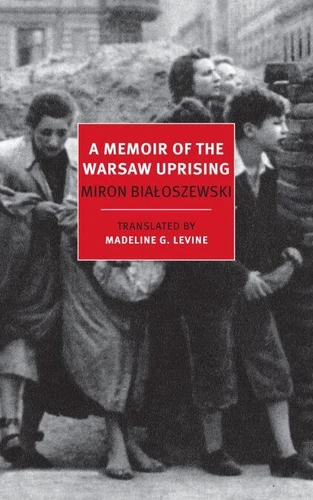
A Memoir of the Warsaw Uprising
Par : ,Formats :
Disponible dans votre compte client Decitre ou Furet du Nord dès validation de votre commande. Le format ePub protégé est :
- Compatible avec une lecture sur My Vivlio (smartphone, tablette, ordinateur)
- Compatible avec une lecture sur liseuses Vivlio
- Pour les liseuses autres que Vivlio, vous devez utiliser le logiciel Adobe Digital Edition. Non compatible avec la lecture sur les liseuses Kindle, Remarkable et Sony
- Non compatible avec un achat hors France métropolitaine
 , qui est-ce ?
Notre partenaire de plateforme de lecture numérique où vous retrouverez l'ensemble de vos ebooks gratuitement
Pour en savoir plus sur nos ebooks, consultez notre aide en ligne ici
C'est si simple ! Lisez votre ebook avec l'app Vivlio sur votre tablette, mobile ou ordinateur :

- Nombre de pages288
- FormatePub
- ISBN978-1-59017-697-9
- EAN9781590176979
- Date de parution27/10/2015
- Protection num.Adobe DRM
- Taille3 Mo
- Infos supplémentairesepub
- ÉditeurNYRB Classics
Résumé
A blow-by-blow, ground-level account of the 1944 Warsaw Uprising, the 2-month Polish Resistance effort to liberate Warsaw from Nazi occupation. Poland's most famous post-war poet offers "the finest book about the insurrection of 1944"-an essential read for fans of WW2 history (John Carpenter). On August 1, 1944, Miron Bialoszewski, later to gain renown as one of Poland's most innovative poets, went out to run an errand for his mother and ran into history.
With Soviet forces on the outskirts of Warsaw, the Polish capital revolted against 5 years of Nazi occupation, an uprising that began in a spirit of heroic optimism. 63 days later it came to a tragic end. The Nazis suppressed the insurgents ruthlessly, reducing Warsaw to rubble while slaughtering some 200, 000 people, mostly through mass executions. The Red Army simply looked on. First written over 25 years after the uprising, Bialoszewski's account gives readers an unforgettable sense of the chaos and immediacy of the final days of World War II.
He tells of slipping back and forth under German fire, dodging sniper bullets, collapsing with exhaustion, rescuing the wounded, and burying the dead. This unusual memoir is a major work of literature and a reflection on memory that resists the terrible destruction it records. Madeline G. Levine has extensively revised her 1977 translation, and passages that were unpublishable in Communist Poland have been restored.
With Soviet forces on the outskirts of Warsaw, the Polish capital revolted against 5 years of Nazi occupation, an uprising that began in a spirit of heroic optimism. 63 days later it came to a tragic end. The Nazis suppressed the insurgents ruthlessly, reducing Warsaw to rubble while slaughtering some 200, 000 people, mostly through mass executions. The Red Army simply looked on. First written over 25 years after the uprising, Bialoszewski's account gives readers an unforgettable sense of the chaos and immediacy of the final days of World War II.
He tells of slipping back and forth under German fire, dodging sniper bullets, collapsing with exhaustion, rescuing the wounded, and burying the dead. This unusual memoir is a major work of literature and a reflection on memory that resists the terrible destruction it records. Madeline G. Levine has extensively revised her 1977 translation, and passages that were unpublishable in Communist Poland have been restored.