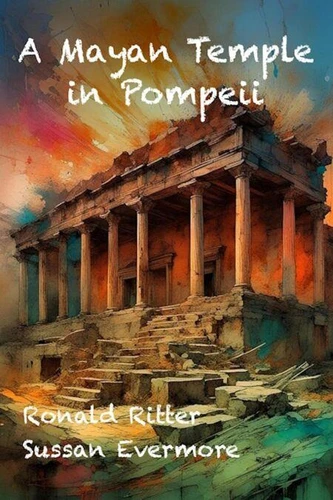
A Mayan Temple in Pompeii. History
Par :Formats :
Disponible dans votre compte client Decitre ou Furet du Nord dès validation de votre commande. Le format ePub est :
- Compatible avec une lecture sur My Vivlio (smartphone, tablette, ordinateur)
- Compatible avec une lecture sur liseuses Vivlio
- Pour les liseuses autres que Vivlio, vous devez utiliser le logiciel Adobe Digital Edition. Non compatible avec la lecture sur les liseuses Kindle, Remarkable et Sony
 , qui est-ce ?
Notre partenaire de plateforme de lecture numérique où vous retrouverez l'ensemble de vos ebooks gratuitement
Pour en savoir plus sur nos ebooks, consultez notre aide en ligne ici
C'est si simple ! Lisez votre ebook avec l'app Vivlio sur votre tablette, mobile ou ordinateur :

- FormatePub
- ISBN8233289828
- EAN9798233289828
- Date de parution17/01/2026
- Protection num.pas de protection
- Infos supplémentairesepub
- ÉditeurLinda Balsamo
Résumé
The archaeological site of Pompeii in southern Italy was an ancient Roman town situated near modern Naples. It was covered in six meters of ash and pumice by the eruption of Mount Vesuvius in 79 A. D. The site lay virtually undisturbed until its initial discovery in 1599 and further excavation by Rocque de Alcubierre in 1748. The exciting part about this is that the town is a fully preserved time capsule of Roman life in 79AD.
What you see today has not been tampered with over time and therefore accurate to assume the structures are true historical records. So what has this to do with this book?What we found in one of the fully excavated villas is an exact scaled reproduction of a Mayan temple at Chichen Itza. The conclusion is obvious that either Roman or Phoenician traders travelled to the Yucatan in Mexico and returned to Pompeii prior to 79 A.
D. We have the photographic evidence and the measurements for you to make an informed decision of what you are about to see. Even better, like us, go there look and review the physical evidence and make your personal conclusion. Modern archaeologists find new material difficult to embrace because it challengers old entrenched ideas and concepts. However this discovery will change the perception of the age of the Mayan archaeological site of Chichen Itza in Mexico.
It also changes forever the question, did early Roman of Phoenician traders travel to Mexico and now the answer is, yes they certainly did. So please join us on the journey of a lifetime as we go to a new place in our understanding of ancient Mexico and the Roman world.
What you see today has not been tampered with over time and therefore accurate to assume the structures are true historical records. So what has this to do with this book?What we found in one of the fully excavated villas is an exact scaled reproduction of a Mayan temple at Chichen Itza. The conclusion is obvious that either Roman or Phoenician traders travelled to the Yucatan in Mexico and returned to Pompeii prior to 79 A.
D. We have the photographic evidence and the measurements for you to make an informed decision of what you are about to see. Even better, like us, go there look and review the physical evidence and make your personal conclusion. Modern archaeologists find new material difficult to embrace because it challengers old entrenched ideas and concepts. However this discovery will change the perception of the age of the Mayan archaeological site of Chichen Itza in Mexico.
It also changes forever the question, did early Roman of Phoenician traders travel to Mexico and now the answer is, yes they certainly did. So please join us on the journey of a lifetime as we go to a new place in our understanding of ancient Mexico and the Roman world.