SOLDES
Jusqu'à -70% sur une sélection d'articles*

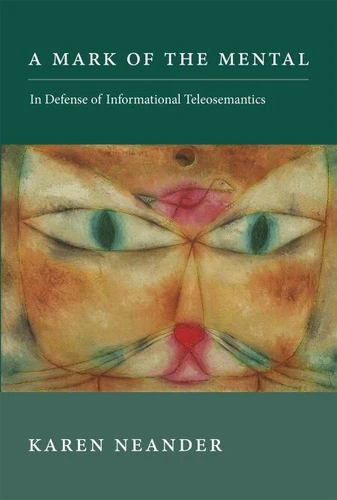
A Mark of the Mental. In Defense of Informational Teleosemantics
Par :Formats :
Disponible dans votre compte client Decitre ou Furet du Nord dès validation de votre commande. Le format ePub protégé est :
- Compatible avec une lecture sur My Vivlio (smartphone, tablette, ordinateur)
- Compatible avec une lecture sur liseuses Vivlio
- Pour les liseuses autres que Vivlio, vous devez utiliser le logiciel Adobe Digital Edition. Non compatible avec la lecture sur les liseuses Kindle, Remarkable et Sony
- Non compatible avec un achat hors France métropolitaine
 , qui est-ce ?
Notre partenaire de plateforme de lecture numérique où vous retrouverez l'ensemble de vos ebooks gratuitement
Pour en savoir plus sur nos ebooks, consultez notre aide en ligne ici
C'est si simple ! Lisez votre ebook avec l'app Vivlio sur votre tablette, mobile ou ordinateur :

- Nombre de pages344
- FormatePub
- ISBN978-0-262-33987-2
- EAN9780262339872
- Date de parution16/06/2017
- Protection num.Adobe DRM
- Taille924 Ko
- Infos supplémentairesepub
- ÉditeurThe MIT Press
Résumé
Drawing on insights from causal theories of reference, teleosemantics, and state space semantics, a theory of naturalized mental representation. In A Mark of the Mental, Karen Neander considers the representational power of mental states-described by the cognitive scientist Zenon Pylyshyn as the "second hardest puzzle" of philosophy of mind (the first being consciousness). The puzzle at the heart of the book is sometimes called "the problem of mental content, " "Brentano's problem, " or "the problem of intentionality." Its motivating mystery is how neurobiological states can have semantic properties such as meaning or reference.
Neander proposes a naturalistic account for sensory-perceptual (nonconceptual) representations. Neander draws on insights from state-space semantics (which appeals to relations of second-order similarity between representing and represented domains), causal theories of reference (which claim the reference relation is a causal one), and teleosemantic theories (which claim that semantic norms, at their simplest, depend on functional norms).
She proposes and defends an intuitive, theoretically well-motivated but highly controversial thesis: sensory-perceptual systems have the function to produce inner state changes that are the analogs of as well as caused by their referents. Neander shows that the three main elements-functions, causal-information relations, and relations of second-order similarity-complement rather than conflict with each other.
After developing an argument for teleosemantics by examining the nature of explanation in the mind and brain sciences, she develops a theory of mental content and defends it against six main content-determinacy challenges to a naturalized semantics.
Neander proposes a naturalistic account for sensory-perceptual (nonconceptual) representations. Neander draws on insights from state-space semantics (which appeals to relations of second-order similarity between representing and represented domains), causal theories of reference (which claim the reference relation is a causal one), and teleosemantic theories (which claim that semantic norms, at their simplest, depend on functional norms).
She proposes and defends an intuitive, theoretically well-motivated but highly controversial thesis: sensory-perceptual systems have the function to produce inner state changes that are the analogs of as well as caused by their referents. Neander shows that the three main elements-functions, causal-information relations, and relations of second-order similarity-complement rather than conflict with each other.
After developing an argument for teleosemantics by examining the nature of explanation in the mind and brain sciences, she develops a theory of mental content and defends it against six main content-determinacy challenges to a naturalized semantics.