SOLDES
Jusqu'à -70% sur une sélection d'articles*

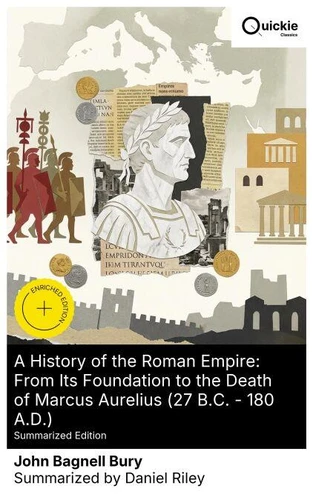
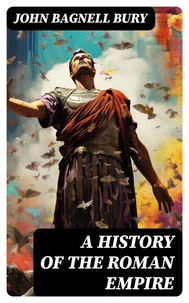
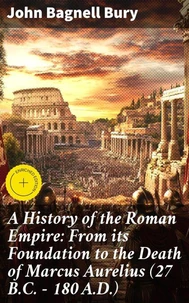
A History of the Roman Empire: From Its Foundation to the Death of Marcus Aurelius (27 B.C. – 180 A.D.) (Summarized Edition). Enriched edition. Administration, Armies, and Frontiers of the Principate
Par : ,Formats :
Disponible dans votre compte client Decitre ou Furet du Nord dès validation de votre commande. Le format ePub est :
- Compatible avec une lecture sur My Vivlio (smartphone, tablette, ordinateur)
- Compatible avec une lecture sur liseuses Vivlio
- Pour les liseuses autres que Vivlio, vous devez utiliser le logiciel Adobe Digital Edition. Non compatible avec la lecture sur les liseuses Kindle, Remarkable et Sony
 , qui est-ce ?
Notre partenaire de plateforme de lecture numérique où vous retrouverez l'ensemble de vos ebooks gratuitement
Pour en savoir plus sur nos ebooks, consultez notre aide en ligne ici
C'est si simple ! Lisez votre ebook avec l'app Vivlio sur votre tablette, mobile ou ordinateur :

- Nombre de pages208
- FormatePub
- ISBN859-65--4787757-8
- EAN8596547877578
- Date de parution10/01/2026
- Protection num.Digital Watermarking
- Taille851 Ko
- Infos supplémentairesepub
- ÉditeurFORGOTTEN BOOKS
Résumé
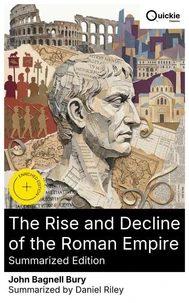
First published in 1893, John Bagnell Bury's survey of the Principate, from Augustus to Marcus Aurelius, blends panoramic narrative with diagnostic analysis. Chronology is punctuated by thematic chapters on institutions, provincial governance, army and finance, frontier policy, and religious change. Reading Tacitus, Suetonius, and Dio alongside inscriptions and coinage, Bury favors verifiable evidence over rhetoric; the prose is limpid and restrained, a late-Victorian classic that tempers Gibbon's grand moral arc with Rankean method.
An Irish classicist turned Regius Professor of Modern History at Cambridge, Bury (1861-1927) championed history as a science. Training in Greek and Latin philology, editorial work on Gibbon, and close use of epigraphy and numismatics inclined him toward institutional explanation over anecdote, and toward careful source criticism that anchors his portrait of the Julio-Claudian, Flavian, and Antonine regimes.
Recommended to students and scholars alike, this remains a lucid, authoritative baseline for the early Empire: rigorous in documentation, alert to administrative mechanics, and immune to melodrama. Read it as a companion to Mommsen and as a corrective to Gibbon's rhetoric, or as a self-sufficient, disciplined guide. Quickie Classics summarizes timeless works with precision, preserving the author's voice and keeping the prose clear, fast, and readable-distilled, never diluted.
Enriched Edition extras: Introduction · Synopsis · Historical Context · Brief Analysis · 4 Reflection Q&As · Editorial Footnotes.
An Irish classicist turned Regius Professor of Modern History at Cambridge, Bury (1861-1927) championed history as a science. Training in Greek and Latin philology, editorial work on Gibbon, and close use of epigraphy and numismatics inclined him toward institutional explanation over anecdote, and toward careful source criticism that anchors his portrait of the Julio-Claudian, Flavian, and Antonine regimes.
Recommended to students and scholars alike, this remains a lucid, authoritative baseline for the early Empire: rigorous in documentation, alert to administrative mechanics, and immune to melodrama. Read it as a companion to Mommsen and as a corrective to Gibbon's rhetoric, or as a self-sufficient, disciplined guide. Quickie Classics summarizes timeless works with precision, preserving the author's voice and keeping the prose clear, fast, and readable-distilled, never diluted.
Enriched Edition extras: Introduction · Synopsis · Historical Context · Brief Analysis · 4 Reflection Q&As · Editorial Footnotes.
A propos de John Bagnell Bury

0,99 €