SOLDES
Jusqu'à -70% sur une sélection d'articles*

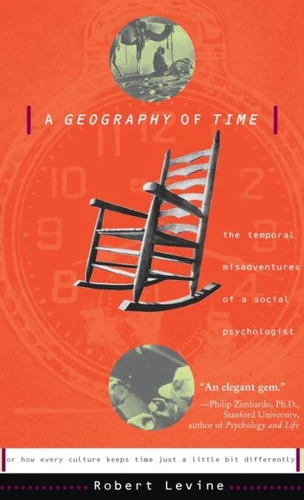
A Geography Of Time. On Tempo, Culture, And The Pace Of Life
Par :Formats :
Disponible dans votre compte client Decitre ou Furet du Nord dès validation de votre commande. Le format ePub protégé est :
- Compatible avec une lecture sur My Vivlio (smartphone, tablette, ordinateur)
- Compatible avec une lecture sur liseuses Vivlio
- Pour les liseuses autres que Vivlio, vous devez utiliser le logiciel Adobe Digital Edition. Non compatible avec la lecture sur les liseuses Kindle, Remarkable et Sony
- Non compatible avec un achat hors France métropolitaine
 , qui est-ce ?
Notre partenaire de plateforme de lecture numérique où vous retrouverez l'ensemble de vos ebooks gratuitement
Pour en savoir plus sur nos ebooks, consultez notre aide en ligne ici
C'est si simple ! Lisez votre ebook avec l'app Vivlio sur votre tablette, mobile ou ordinateur :

- Nombre de pages416
- FormatePub
- ISBN978-0-7867-2253-2
- EAN9780786722532
- Date de parution31/07/2008
- Protection num.Adobe DRM
- Infos supplémentairesepub
- ÉditeurBasic Books
Résumé
In this engaging and spirited book, eminent social psychologist Robert Levine asks us to explore a dimension of our experience that we take for granted-our perception of time. When we travel to a different country, or even a different city in the United States, we assume that a certain amount of cultural adjustment will be required, whether it's getting used to new food or negotiating a foreign language, adapting to a different standard of living or another currency.
In fact, what contributes most to our sense of disorientation is having to adapt to another culture's sense of time. Levine, who has devoted his career to studying time and the pace of life, takes us on an enchanting tour of time through the ages and around the world. As he recounts his unique experiences with humor and deep insight, we travel with him to Brazil, where to be three hours late is perfectly acceptable, and to Japan, where he finds a sense of the long-term that is unheard of in the West.
We visit communities in the United States and find that population size affects the pace of life-and even the pace of walking. We travel back in time to ancient Greece to examine early clocks and sundials, then move forward through the centuries to the beginnings of "clock time" during the Industrial Revolution. We learn that there are places in the world today where people still live according to "nature time, " the rhythm of the sun and the seasons, and "event time, " the structuring of time around happenings(when you want to make a late appointment in Burundi, you say, "I'll see you when the cows come in").
Levine raises some fascinating questions. How do we use our time? Are we being ruled by the clock? What is this doing to our cities? To our relationships? To our own bodies and psyches? Are there decisions we have made without conscious choice? Alternative tempos we might prefer? Perhaps, Levine argues, our goal should be to try to live in a "multitemporal" society, one in which we learn to move back and forth among nature time, event time, and clock time.
In other words, each of us must chart our own geography of time. If we can do that, we will have achieved temporal prosperity.
In fact, what contributes most to our sense of disorientation is having to adapt to another culture's sense of time. Levine, who has devoted his career to studying time and the pace of life, takes us on an enchanting tour of time through the ages and around the world. As he recounts his unique experiences with humor and deep insight, we travel with him to Brazil, where to be three hours late is perfectly acceptable, and to Japan, where he finds a sense of the long-term that is unheard of in the West.
We visit communities in the United States and find that population size affects the pace of life-and even the pace of walking. We travel back in time to ancient Greece to examine early clocks and sundials, then move forward through the centuries to the beginnings of "clock time" during the Industrial Revolution. We learn that there are places in the world today where people still live according to "nature time, " the rhythm of the sun and the seasons, and "event time, " the structuring of time around happenings(when you want to make a late appointment in Burundi, you say, "I'll see you when the cows come in").
Levine raises some fascinating questions. How do we use our time? Are we being ruled by the clock? What is this doing to our cities? To our relationships? To our own bodies and psyches? Are there decisions we have made without conscious choice? Alternative tempos we might prefer? Perhaps, Levine argues, our goal should be to try to live in a "multitemporal" society, one in which we learn to move back and forth among nature time, event time, and clock time.
In other words, each of us must chart our own geography of time. If we can do that, we will have achieved temporal prosperity.