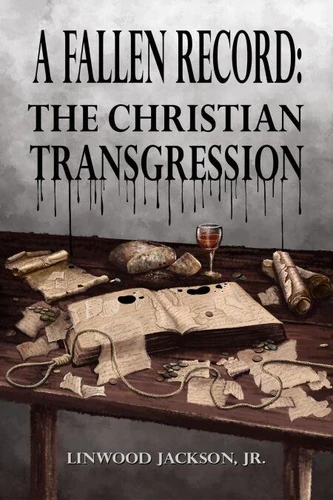
A Fallen Record: The Christian Transgression
Par :Formats :
Disponible dans votre compte client Decitre ou Furet du Nord dès validation de votre commande. Le format ePub est :
- Compatible avec une lecture sur My Vivlio (smartphone, tablette, ordinateur)
- Compatible avec une lecture sur liseuses Vivlio
- Pour les liseuses autres que Vivlio, vous devez utiliser le logiciel Adobe Digital Edition. Non compatible avec la lecture sur les liseuses Kindle, Remarkable et Sony
 , qui est-ce ?
Notre partenaire de plateforme de lecture numérique où vous retrouverez l'ensemble de vos ebooks gratuitement
Pour en savoir plus sur nos ebooks, consultez notre aide en ligne ici
C'est si simple ! Lisez votre ebook avec l'app Vivlio sur votre tablette, mobile ou ordinateur :

- FormatePub
- ISBN978-1-005-73795-5
- EAN9781005737955
- Date de parution19/09/2022
- Protection num.pas de protection
- Infos supplémentairesepub
- ÉditeurC. C. Chamberlane
Résumé
Learning from past mistakes is the greatest defense against present and future error. There is no escaping the fact that, in whatever form it may appear, history will repeat itself. But we can create better years of antiquity by intelligently analyzing the past to alter the future's course, and while making the present a benevolent catalyst to forward a more complete amendment in thought and feeling.
In this comprehensive examination of the early Christian church, the reader is taken into the past to observe the religious world through the eyes of John, Peter, and Paul. We begin our journey around the year 50A. D. We will then conscientiously monitor the development of the early church until 300A. D. This primitive history reveals an important transition in Christian manners of devotion. Christian elders, abandoning the apostles' doctrine and fellowship, began establishing a creed and service at odds with what that the first apostles preached, and with what their LORD and His Christ taught.
The theme behind this early period of church history is captured by the apostle John, who writes, "They went out from us, but they were not of us, " 1 John 2:19. The reader will understand what prompted John to say this, and why, at this point in time, it was necessary to chronicle such a conclusion.
In this comprehensive examination of the early Christian church, the reader is taken into the past to observe the religious world through the eyes of John, Peter, and Paul. We begin our journey around the year 50A. D. We will then conscientiously monitor the development of the early church until 300A. D. This primitive history reveals an important transition in Christian manners of devotion. Christian elders, abandoning the apostles' doctrine and fellowship, began establishing a creed and service at odds with what that the first apostles preached, and with what their LORD and His Christ taught.
The theme behind this early period of church history is captured by the apostle John, who writes, "They went out from us, but they were not of us, " 1 John 2:19. The reader will understand what prompted John to say this, and why, at this point in time, it was necessary to chronicle such a conclusion.