SOLDES
Jusqu'à -70% sur une sélection d'articles*

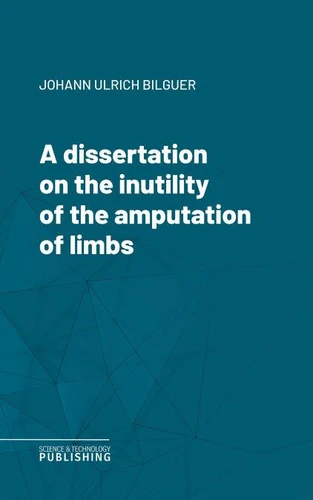
A dissertation on the inutility of the amputation of limbs
Par :Formats :
Disponible dans votre compte client Decitre ou Furet du Nord dès validation de votre commande. Le format ePub est :
- Compatible avec une lecture sur My Vivlio (smartphone, tablette, ordinateur)
- Compatible avec une lecture sur liseuses Vivlio
- Pour les liseuses autres que Vivlio, vous devez utiliser le logiciel Adobe Digital Edition. Non compatible avec la lecture sur les liseuses Kindle, Remarkable et Sony
 , qui est-ce ?
Notre partenaire de plateforme de lecture numérique où vous retrouverez l'ensemble de vos ebooks gratuitement
Pour en savoir plus sur nos ebooks, consultez notre aide en ligne ici
C'est si simple ! Lisez votre ebook avec l'app Vivlio sur votre tablette, mobile ou ordinateur :

- FormatePub
- ISBN978-2-5281-1015-7
- EAN9782528110157
- Date de parution01/09/2025
- Protection num.pas de protection
- Infos supplémentairesepub
- ÉditeurScience & Technology Publishing
Résumé
A Dissertation on the Inutility of the Amputation of Limbs is a seminal medical treatise authored by Johann Ulrich Bilguer, a prominent 18th-century Prussian military surgeon. First published in 1764 and later translated into English, this work challenges the prevailing surgical orthodoxy of the time, which advocated for the frequent amputation of limbs as a primary treatment for severe injuries, particularly those sustained in battle.
Drawing upon his extensive experience in military hospitals and a careful analysis of case studies, Bilguer argues that amputation is often unnecessary and, in many cases, detrimental to patient outcomes. He meticulously examines the physiological consequences of limb removal, the risks of infection, and the psychological trauma endured by patients. Bilguer advocates for more conservative and restorative approaches, emphasizing the importance of preserving life and function whenever possible.
His dissertation is both a critique of contemporary surgical practices and a compassionate appeal for the humane treatment of the wounded. The book is notable for its detailed observations, rational arguments, and its influence on the evolution of surgical techniques, marking a significant shift towards limb-sparing procedures in the history of medicine. Through its pages, readers gain insight into the ethical and practical considerations that shaped 18th-century surgery and the enduring quest to balance medical intervention with patient welfare.
Drawing upon his extensive experience in military hospitals and a careful analysis of case studies, Bilguer argues that amputation is often unnecessary and, in many cases, detrimental to patient outcomes. He meticulously examines the physiological consequences of limb removal, the risks of infection, and the psychological trauma endured by patients. Bilguer advocates for more conservative and restorative approaches, emphasizing the importance of preserving life and function whenever possible.
His dissertation is both a critique of contemporary surgical practices and a compassionate appeal for the humane treatment of the wounded. The book is notable for its detailed observations, rational arguments, and its influence on the evolution of surgical techniques, marking a significant shift towards limb-sparing procedures in the history of medicine. Through its pages, readers gain insight into the ethical and practical considerations that shaped 18th-century surgery and the enduring quest to balance medical intervention with patient welfare.