SOLDES
Jusqu'à -70% sur une sélection d'articles*

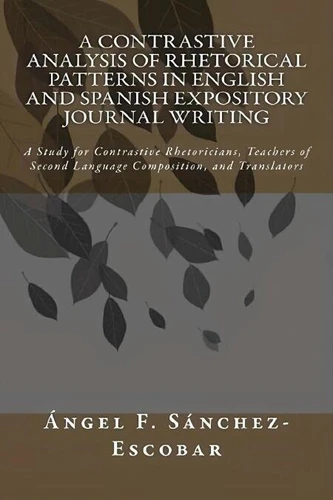
A Contrastive Analysis of Rhetorical Patterns in English and Spanish Expository Journal Writing
Par :Formats :
Disponible dans votre compte client Decitre ou Furet du Nord dès validation de votre commande. Le format ePub est :
- Compatible avec une lecture sur My Vivlio (smartphone, tablette, ordinateur)
- Compatible avec une lecture sur liseuses Vivlio
- Pour les liseuses autres que Vivlio, vous devez utiliser le logiciel Adobe Digital Edition. Non compatible avec la lecture sur les liseuses Kindle, Remarkable et Sony
 , qui est-ce ?
Notre partenaire de plateforme de lecture numérique où vous retrouverez l'ensemble de vos ebooks gratuitement
Pour en savoir plus sur nos ebooks, consultez notre aide en ligne ici
C'est si simple ! Lisez votre ebook avec l'app Vivlio sur votre tablette, mobile ou ordinateur :

- FormatePub
- ISBN8227077608
- EAN9798227077608
- Date de parution26/07/2024
- Protection num.pas de protection
- Infos supplémentairesepub
- ÉditeurBig Dog Books, LLC
Résumé
The great English scientist and philosopher of the Seventeenth Century, Francis Bacon, observed in his essay "Of Studies" that "Reading maketh a full man: conference a ready man; and writing an exact man." Most teachers, in fact, most well educated individuals, would agree with Bacon's observation on the importance of learning to write well. Most would also agree that novice writers can learn much from reading extensively.
By observing how good writers put together a piece of expository writing, choose words, structure sentences, and thus, how their whole argument fits together, novice writers can model good techniques in their own work. However, as anyone who has tried to read and write in a second language quickly discovers, the conventions and parameters for what constitutes "good writing" seem to differ between languages.
Teachers agree that good writing communicates with its audience and does so with a certain style, but beyond those commonalities, they agree on little else.
By observing how good writers put together a piece of expository writing, choose words, structure sentences, and thus, how their whole argument fits together, novice writers can model good techniques in their own work. However, as anyone who has tried to read and write in a second language quickly discovers, the conventions and parameters for what constitutes "good writing" seem to differ between languages.
Teachers agree that good writing communicates with its audience and does so with a certain style, but beyond those commonalities, they agree on little else.