SOLDES
Jusqu'à -70% sur une sélection d'articles*

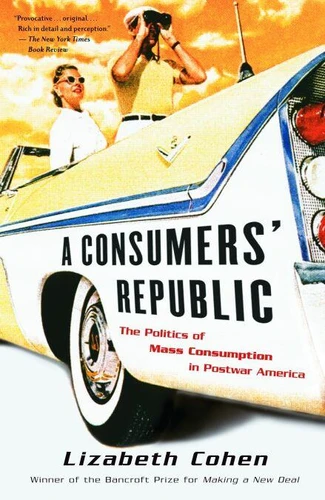
A Consumers' Republic. The Politics of Mass Consumption in Postwar America
Par :Formats :
Disponible dans votre compte client Decitre ou Furet du Nord dès validation de votre commande. Le format ePub protégé est :
- Compatible avec une lecture sur My Vivlio (smartphone, tablette, ordinateur)
- Compatible avec une lecture sur liseuses Vivlio
- Pour les liseuses autres que Vivlio, vous devez utiliser le logiciel Adobe Digital Edition. Non compatible avec la lecture sur les liseuses Kindle, Remarkable et Sony
- Non compatible avec un achat hors France métropolitaine
 , qui est-ce ?
Notre partenaire de plateforme de lecture numérique où vous retrouverez l'ensemble de vos ebooks gratuitement
Pour en savoir plus sur nos ebooks, consultez notre aide en ligne ici
C'est si simple ! Lisez votre ebook avec l'app Vivlio sur votre tablette, mobile ou ordinateur :

- Nombre de pages576
- FormatePub
- ISBN978-0-307-55536-6
- EAN9780307555366
- Date de parution24/12/2008
- Protection num.Adobe DRM
- Taille10 Mo
- Infos supplémentairesepub
- ÉditeurVintage
Résumé
In this signal work of history, Bancroft Prize winner and Pulitzer Prize finalist Lizabeth Cohen shows how the pursuit of prosperity after World War II fueled our pervasive consumer mentality and transformed American life. Trumpeted as a means to promote the general welfare, mass consumption quickly outgrew its economic objectives and became synonymous with patriotism, social equality, and the American Dream.
Material goods came to embody the promise of America, and the power of consumers to purchase everything from vacuum cleaners to convertibles gave rise to the power of citizens to purchase political influence and effect social change. Yet despite undeniable successes and unprecedented affluence, mass consumption also fostered economic inequality and the fracturing of society along gender, class, and racial lines.
In charting the complex legacy of our "Consumers' Republic" Lizabeth Cohen has written a bold, encompassing, and profoundly influential book.
Material goods came to embody the promise of America, and the power of consumers to purchase everything from vacuum cleaners to convertibles gave rise to the power of citizens to purchase political influence and effect social change. Yet despite undeniable successes and unprecedented affluence, mass consumption also fostered economic inequality and the fracturing of society along gender, class, and racial lines.
In charting the complex legacy of our "Consumers' Republic" Lizabeth Cohen has written a bold, encompassing, and profoundly influential book.