SOLDES
Jusqu'à -70% sur une sélection d'articles*

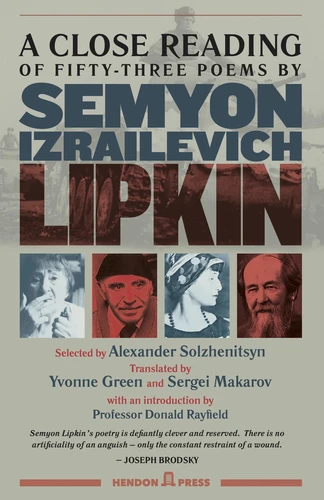
A Close Reading of Fifty-three Poems by Semyon Izrailevich Lipkin
Par : , ,Formats :
Disponible dans votre compte client Decitre ou Furet du Nord dès validation de votre commande. Le format ePub est :
- Compatible avec une lecture sur My Vivlio (smartphone, tablette, ordinateur)
- Compatible avec une lecture sur liseuses Vivlio
- Pour les liseuses autres que Vivlio, vous devez utiliser le logiciel Adobe Digital Edition. Non compatible avec la lecture sur les liseuses Kindle, Remarkable et Sony
 , qui est-ce ?
Notre partenaire de plateforme de lecture numérique où vous retrouverez l'ensemble de vos ebooks gratuitement
Pour en savoir plus sur nos ebooks, consultez notre aide en ligne ici
C'est si simple ! Lisez votre ebook avec l'app Vivlio sur votre tablette, mobile ou ordinateur :

- FormatePub
- ISBN978-1-7397785-5-2
- EAN9781739778552
- Date de parution25/09/2023
- Protection num.pas de protection
- Infos supplémentairesepub
- ÉditeurHendon Press
Résumé
The Jewish, Odesa-born poet, Semyon Izrailevich Lipkin (1911-2003), was a central figure in modern Russian literature, although until recently he was best known in the West for his role in preserving the manuscript of Vasily Grossman's Life and Fate from the KGB. As a Soviet journalist in WW2, he witnessed and wrote about the horrors of Stalingrad which led the Nobel Laureate Josef Brodsky to refer to him as 'Russia's war poet'.
Later, during the years of Stalin's deportation of ethnic groups, Lipkin translated and preserved the language and writings of Tajiks, Uzbeks, Tatars, Kirgiz, Karbadians, and other Soviet nationalities and in doing so became a living repository of their cultures for which he risked censure and arrest from the Soviet authorities. The poems in this volume show the remarkable range of Lipkin's work: his Jewish faith, Stalin's oppression, the Holocaust, and the spiritual fate of mankind and reveal why as a poet he was revered by great Russian writers such as Alexander Solzhenitsyn, Anna Akhmatova and Josef Brodsky.
Later, during the years of Stalin's deportation of ethnic groups, Lipkin translated and preserved the language and writings of Tajiks, Uzbeks, Tatars, Kirgiz, Karbadians, and other Soviet nationalities and in doing so became a living repository of their cultures for which he risked censure and arrest from the Soviet authorities. The poems in this volume show the remarkable range of Lipkin's work: his Jewish faith, Stalin's oppression, the Holocaust, and the spiritual fate of mankind and reveal why as a poet he was revered by great Russian writers such as Alexander Solzhenitsyn, Anna Akhmatova and Josef Brodsky.