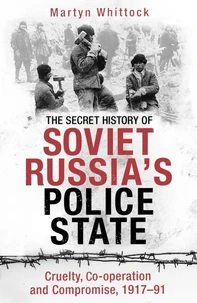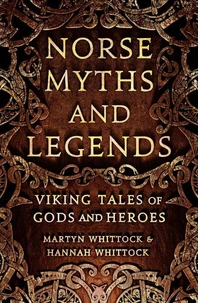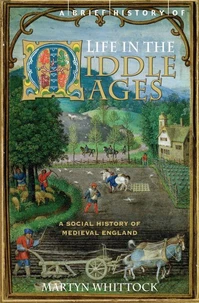
MARTYN WHITTOCK taught history at secondary level for thirty-five years. He has acted as an historical consultant to the National Trust, the BBC and English Heritage and is the author or co-author of forty-eight books, including A Brief History of Life in the Middle Ages, Norse Myths and Legends and The Secret History of Soviet Russia's Police State.
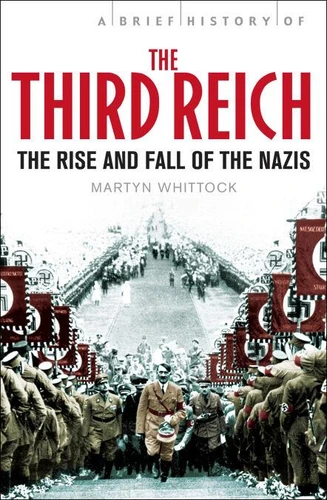
A Brief History of The Third Reich. The Rise and Fall of the Nazis
Par :Formats :
Disponible dans votre compte client Decitre ou Furet du Nord dès validation de votre commande. Le format ePub protégé est :
- Compatible avec une lecture sur My Vivlio (smartphone, tablette, ordinateur)
- Compatible avec une lecture sur liseuses Vivlio
- Pour les liseuses autres que Vivlio, vous devez utiliser le logiciel Adobe Digital Edition. Non compatible avec la lecture sur les liseuses Kindle, Remarkable et Sony
- Non compatible avec un achat hors France métropolitaine
 , qui est-ce ?
Notre partenaire de plateforme de lecture numérique où vous retrouverez l'ensemble de vos ebooks gratuitement
Pour en savoir plus sur nos ebooks, consultez notre aide en ligne ici
C'est si simple ! Lisez votre ebook avec l'app Vivlio sur votre tablette, mobile ou ordinateur :

- Nombre de pages368
- FormatePub
- ISBN978-1-84901-816-6
- EAN9781849018166
- Date de parution22/06/2011
- Protection num.Adobe DRM
- Infos supplémentairesepub
- ÉditeurRobinson
Résumé
The abuse of power, genocide, the destruction of total war, unimaginable cruelty and the suffering of millions were all central features of Hitler's Nazi regime. Yet the Nazis were also highly successful in manipulating images and information: they mobilized and engaged vast numbers of people, caught the imagination of the young and appeared remarkably modern to many contemporary observers. Was the Third Reich a throwback to a mythical past or a brutally modern and technologically advanced state? Was Hitler a strong dictator who achieved his clear goals, or was his chaotic style of government symptomatic of a weak dictator, unable to control the complex and contradictory forces that he had unleashed? Was the Third Reich ruled by terror, or largely supported by a compliant German population? Was the genocide against the Jews a peculiarly German phenomenon, or a uniquely German expression of a terrible wider trend?Whittock explores these and other key questions, interrogating the views of different historians and drawing on a wealth of primary sources - from state-sponsored art to diaries, letters and memoirs of both perpetrators and victims - to provide an overview of the complex evidence.
History should aim to put us firmly in touch with the lives of people living in the past and the issues they faced. Whittock never loses sight of the individuals whose lives were caught up in these extraordinary events, while also giving a lucid overview of the bigger picture.
History should aim to put us firmly in touch with the lives of people living in the past and the issues they faced. Whittock never loses sight of the individuals whose lives were caught up in these extraordinary events, while also giving a lucid overview of the bigger picture.