SOLDES
Jusqu'à -70% sur une sélection d'articles*

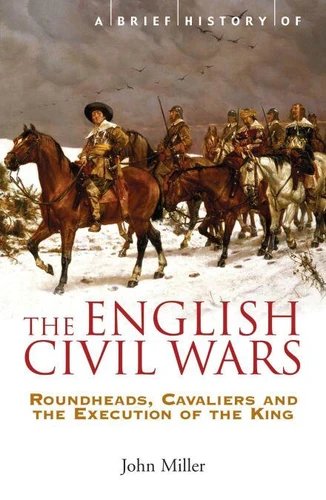
A Brief History of the English Civil Wars. Roundheads, Cavaliers and the Execution of the King
Par :Formats :
Disponible dans votre compte client Decitre ou Furet du Nord dès validation de votre commande. Le format ePub protégé est :
- Compatible avec une lecture sur My Vivlio (smartphone, tablette, ordinateur)
- Compatible avec une lecture sur liseuses Vivlio
- Pour les liseuses autres que Vivlio, vous devez utiliser le logiciel Adobe Digital Edition. Non compatible avec la lecture sur les liseuses Kindle, Remarkable et Sony
- Non compatible avec un achat hors France métropolitaine
 , qui est-ce ?
Notre partenaire de plateforme de lecture numérique où vous retrouverez l'ensemble de vos ebooks gratuitement
Pour en savoir plus sur nos ebooks, consultez notre aide en ligne ici
C'est si simple ! Lisez votre ebook avec l'app Vivlio sur votre tablette, mobile ou ordinateur :

- Nombre de pages240
- FormatePub
- ISBN978-1-4721-0762-6
- EAN9781472107626
- Date de parution06/02/2013
- Protection num.Adobe DRM
- Infos supplémentairesepub
- ÉditeurRobinson
Résumé
Miller provides a clear and comprehensible narrative, a coherent and accurate synthesis, intended as a guide for students and the general reader to an extremely complex period in British history. His aim is to help readers avoid getting lost in a maze of detail and rather to maintain a grasp of the big picture. Although the English Civil War is usually seen, in England at least, as a conflict between two sides, it involved the Scots, the Irish and the army and the people of England, especially London.
At some points, events occurred and perspectives changed with such disorienting rapidity that even those who lived through these events were confused as to where they stood in relation to one another. As the 1640s wore on, events unfolded in ways which the participants had not expected and in many cases did not want. Hindsight might suggest that everything led logically to the trial and execution of the king, but these were in fact highly improbable outcomes.
Since the 1980s, a 'three kingdoms' approach has become almost compulsory, but Miller's focus is unashamedly on England. Events in Scotland and Ireland are covered only insofar as they had an impact on events in England.
At some points, events occurred and perspectives changed with such disorienting rapidity that even those who lived through these events were confused as to where they stood in relation to one another. As the 1640s wore on, events unfolded in ways which the participants had not expected and in many cases did not want. Hindsight might suggest that everything led logically to the trial and execution of the king, but these were in fact highly improbable outcomes.
Since the 1980s, a 'three kingdoms' approach has become almost compulsory, but Miller's focus is unashamedly on England. Events in Scotland and Ireland are covered only insofar as they had an impact on events in England.
A propos de John Miller


19,61 €

4,49 €

3,99 €