SOLDES
Jusqu'à -70% sur une sélection d'articles*

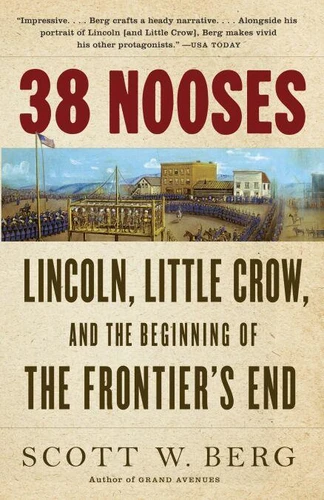
38 Nooses. Lincoln, Little Crow, and the Beginning of the Frontier's End
Par :Formats :
Disponible dans votre compte client Decitre ou Furet du Nord dès validation de votre commande. Le format ePub protégé est :
- Compatible avec une lecture sur My Vivlio (smartphone, tablette, ordinateur)
- Compatible avec une lecture sur liseuses Vivlio
- Pour les liseuses autres que Vivlio, vous devez utiliser le logiciel Adobe Digital Edition. Non compatible avec la lecture sur les liseuses Kindle, Remarkable et Sony
- Non compatible avec un achat hors France métropolitaine
 , qui est-ce ?
Notre partenaire de plateforme de lecture numérique où vous retrouverez l'ensemble de vos ebooks gratuitement
Pour en savoir plus sur nos ebooks, consultez notre aide en ligne ici
C'est si simple ! Lisez votre ebook avec l'app Vivlio sur votre tablette, mobile ou ordinateur :

- Nombre de pages384
- FormatePub
- ISBN978-0-307-90739-4
- EAN9780307907394
- Date de parution04/12/2012
- Protection num.Adobe DRM
- Taille5 Mo
- Infos supplémentairesepub
- ÉditeurVintage
Résumé
In August 1862, after decades of broken treaties, increasing hardship, and relentless encroachment on their lands, a group of Dakota warriors convened a council at the tepee of their leader, Little Crow. Knowing the strength and resilience of the young American nation, Little Crow counseled caution, but anger won the day. Forced to either lead his warriors in a war he knew they could not win or leave them to their fates, he declared, "[Little Crow] is not a coward: he will die with you." So began six weeks of intense conflict along the Minnesota frontier as the Dakotas clashed with settlers and federal troops, all the while searching for allies in their struggle.
Once the uprising was smashed and the Dakotas captured, a military commission was convened, which quickly found more than three hundred Indians guilty of murder. President Lincoln, embroiled in the most devastating period of the Civil War, personally intervened in order to spare the lives of 265 of the condemned men, but the toll on the Dakota nation was still staggering: a way of life destroyed, a tribe forcibly relocated to barren and unfamiliar territory, and 38 Dakota warriors hanged-the largest government-sanctioned execution in American history.
Scott W. Berg recounts the conflict through the stories of several remarkable characters, including Little Crow, who foresaw how ruinous the conflict would be for his tribe; Sarah Wakefield, who had been captured by the Dakotas, then vilified as an "Indian lover" when she defended them; Minnesota bishop Henry Benjamin Whipple, who was a tireless advocate for the Indians' cause; and Lincoln, who transcended his own family history to pursue justice.
Written with uncommon immediacy and insight, 38 Nooses details these events within the larger context of the Civil War, the history of the Dakota people, and the subsequent United States-Indian wars. It is a revelation of an overlooked but seminal moment in American history.
Once the uprising was smashed and the Dakotas captured, a military commission was convened, which quickly found more than three hundred Indians guilty of murder. President Lincoln, embroiled in the most devastating period of the Civil War, personally intervened in order to spare the lives of 265 of the condemned men, but the toll on the Dakota nation was still staggering: a way of life destroyed, a tribe forcibly relocated to barren and unfamiliar territory, and 38 Dakota warriors hanged-the largest government-sanctioned execution in American history.
Scott W. Berg recounts the conflict through the stories of several remarkable characters, including Little Crow, who foresaw how ruinous the conflict would be for his tribe; Sarah Wakefield, who had been captured by the Dakotas, then vilified as an "Indian lover" when she defended them; Minnesota bishop Henry Benjamin Whipple, who was a tireless advocate for the Indians' cause; and Lincoln, who transcended his own family history to pursue justice.
Written with uncommon immediacy and insight, 38 Nooses details these events within the larger context of the Civil War, the history of the Dakota people, and the subsequent United States-Indian wars. It is a revelation of an overlooked but seminal moment in American history.