We live in an age where division has become our default setting. Violence, outrage, and hostility fill our conversations, not just in the halls of power but in our homes, communities, and daily interactions. The speed of modern life, magnified by endless streams of information, has left us raw, reactive, and easily swept into anger. The problem is not only what we believe, but how we think. We divide the world into categories-us and them, right and wrong, worthy and unworthy.
We cling to our tribes, convinced that survival depends on identifying enemies rather than understanding neighbors. Yet history shows us that this reflex, while once necessary for survival, now threatens our very ability to coexist. If peace is to have any chance in our time, it will not be built on force, on victory, or on silencing those we fear. Peace must begin with a new way of thinking-one that sees beyond the surface, that asks not "How are they different?" but "How are they human, as I am human?"This book is an invitation to that examination.
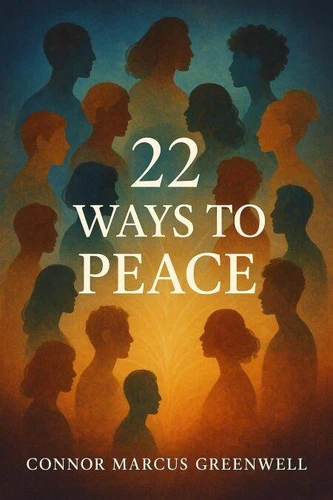
Each of these twenty-two reflections offers a way to loosen our grip on fear, on labels, on pride, and on the habits of thought that keep us divided. They are not prescriptions for utopia, but practical steps toward recognizing the common threads of suffering, love, and meaning that run through us all. The path is not easy. It demands humility, patience, and courage. But it is possible. And in moments like these-when the noise of division grows so loud-it is not only possible; it is necessary.
Let us begin.
We live in an age where division has become our default setting. Violence, outrage, and hostility fill our conversations, not just in the halls of power but in our homes, communities, and daily interactions. The speed of modern life, magnified by endless streams of information, has left us raw, reactive, and easily swept into anger. The problem is not only what we believe, but how we think. We divide the world into categories-us and them, right and wrong, worthy and unworthy.
We cling to our tribes, convinced that survival depends on identifying enemies rather than understanding neighbors. Yet history shows us that this reflex, while once necessary for survival, now threatens our very ability to coexist. If peace is to have any chance in our time, it will not be built on force, on victory, or on silencing those we fear. Peace must begin with a new way of thinking-one that sees beyond the surface, that asks not "How are they different?" but "How are they human, as I am human?"This book is an invitation to that examination.
Each of these twenty-two reflections offers a way to loosen our grip on fear, on labels, on pride, and on the habits of thought that keep us divided. They are not prescriptions for utopia, but practical steps toward recognizing the common threads of suffering, love, and meaning that run through us all. The path is not easy. It demands humility, patience, and courage. But it is possible. And in moments like these-when the noise of division grows so loud-it is not only possible; it is necessary.
Let us begin.


 , qui est-ce ?