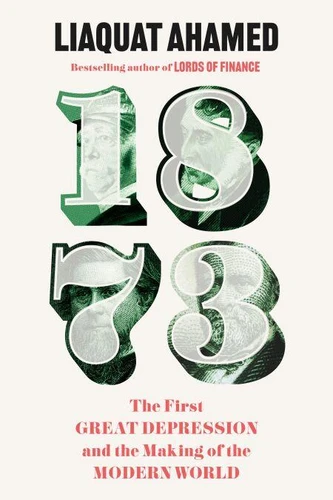
***LONGLISTED FOR THE FT BUSINESS BOOK OF THE YEAR AWARD 2026***From the author of the Pulitzer Prize-winning Lords of Finance comes a brilliant account of the earliest truly global financial calamity. On Friday, 9 May 1873 the Vienna stock market collapsed. Four months later Wall Street was in trouble. Elsewhere, as panic selling spread across financial markets, some countries defaulted on their debts, while the Bank of England was forced to raise its rates to their highest level in a century.
It was the first global crash in history. And it was to have calamitous consequences. In his powerful new book, the author of the Pulitzer Prize-winning Lords of Finance tells the epic story of that crash and explores its economic and human costs. He describes how the growth of the international bond market in the 1850s and 60s funded a frenzy of speculation in railways, construction and nation-building.
He examines those who became swept up in the boom, from leading bankers like the Rothschild dynasty to national leaders both visionary and venal, to rogues and chancers like the shameless Jay Gould, to such sceptical onlookers as Mark Twain and Karl Marx. He then traces how, in the subsequent panic, investors were left with catastrophic losses, while governments on both sides of the Atlantic rushed misguidedly to reorder the world's financial system.
As he shows, the blunders made as the crisis unfolded set the stage for twenty years of deflation, and a punitive legacy of aggrieved populism that infected every part of the globe. Amid the crash's many aftershocks, the US abandoned Reconstruction, European powers staged an economic takeover of the heavily indebted Ottoman Empire, and the principle of international free trade came under pressure.
Meanwhile there was a revival of antisemitic movements in Europe that blamed 'Jewish finance' for the disaster. A brilliant evocation of a key turning point in world history, 1873 is also a masterly examination of the unforeseen political and social consequences of financial misjudgements.
***LONGLISTED FOR THE FT BUSINESS BOOK OF THE YEAR AWARD 2026***From the author of the Pulitzer Prize-winning Lords of Finance comes a brilliant account of the earliest truly global financial calamity. On Friday, 9 May 1873 the Vienna stock market collapsed. Four months later Wall Street was in trouble. Elsewhere, as panic selling spread across financial markets, some countries defaulted on their debts, while the Bank of England was forced to raise its rates to their highest level in a century.
It was the first global crash in history. And it was to have calamitous consequences. In his powerful new book, the author of the Pulitzer Prize-winning Lords of Finance tells the epic story of that crash and explores its economic and human costs. He describes how the growth of the international bond market in the 1850s and 60s funded a frenzy of speculation in railways, construction and nation-building.
He examines those who became swept up in the boom, from leading bankers like the Rothschild dynasty to national leaders both visionary and venal, to rogues and chancers like the shameless Jay Gould, to such sceptical onlookers as Mark Twain and Karl Marx. He then traces how, in the subsequent panic, investors were left with catastrophic losses, while governments on both sides of the Atlantic rushed misguidedly to reorder the world's financial system.
As he shows, the blunders made as the crisis unfolded set the stage for twenty years of deflation, and a punitive legacy of aggrieved populism that infected every part of the globe. Amid the crash's many aftershocks, the US abandoned Reconstruction, European powers staged an economic takeover of the heavily indebted Ottoman Empire, and the principle of international free trade came under pressure.
Meanwhile there was a revival of antisemitic movements in Europe that blamed 'Jewish finance' for the disaster. A brilliant evocation of a key turning point in world history, 1873 is also a masterly examination of the unforeseen political and social consequences of financial misjudgements.

 , qui est-ce ?
