SOLDES
Jusqu'à -70% sur une sélection d'articles*

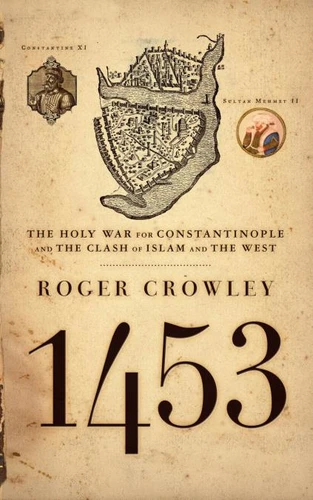
1453. The Holy War for Constantinople and the Clash of Islam and the West
Par :Formats :
Disponible dans votre compte client Decitre ou Furet du Nord dès validation de votre commande. Le format ePub protégé est :
- Compatible avec une lecture sur My Vivlio (smartphone, tablette, ordinateur)
- Compatible avec une lecture sur liseuses Vivlio
- Pour les liseuses autres que Vivlio, vous devez utiliser le logiciel Adobe Digital Edition. Non compatible avec la lecture sur les liseuses Kindle, Remarkable et Sony
- Non compatible avec un achat hors France métropolitaine
 , qui est-ce ?
Notre partenaire de plateforme de lecture numérique où vous retrouverez l'ensemble de vos ebooks gratuitement
Pour en savoir plus sur nos ebooks, consultez notre aide en ligne ici
C'est si simple ! Lisez votre ebook avec l'app Vivlio sur votre tablette, mobile ou ordinateur :

- Nombre de pages336
- FormatePub
- ISBN978-1-4013-0558-1
- EAN9781401305581
- Date de parution11/02/2013
- Protection num.Adobe DRM
- Infos supplémentairesepub
- ÉditeurGrand Central Publishing
Résumé
A gripping exploration of the fall of Constantinople and its connection to the world we live in today. The fall of Constantinople in 1453 signaled a shift in history and the end of the Byzantium Empire. Roger Crowley's comprehensive account of the battle between Mehmet II, Sultan of the Ottoman Empire, and Constantine XI, the 57th emperor of Byzantium, illuminates the period in history that was a precursor to the current conflict between the West and the Middle East.
For a thousand years Constantinople was quite simply "the city": fabulously wealthy, imperial, intimidating-and Christian. Singlehandedly it blunted early Arab enthusiasm for Holy War. When a second wave of Islamic warriors swept out of the Asian steppes in the Middle Ages, Constantinople was the ultimate prize: "The Red Apple." It was a city that had always lived under threat. On average it had survived a siege every forty years for a millennium-until the Ottoman Sultan, Mehmet II, twenty-one years old and hungry for glory, rode up to the walls in April 1453 with a huge army, "numberless as the stars." 1453 is the taut, vivid story of this final struggle for the city, told largely through the accounts of eyewitnesses.
For fifty-five days a tiny group of defenders defied the huge Ottoman army in a seesawing contest fought on land, at sea, and underground. 1453 is both a gripping work of narrative history and an account of the war between Christendom and Islam that still has echoes in the modern world.
For a thousand years Constantinople was quite simply "the city": fabulously wealthy, imperial, intimidating-and Christian. Singlehandedly it blunted early Arab enthusiasm for Holy War. When a second wave of Islamic warriors swept out of the Asian steppes in the Middle Ages, Constantinople was the ultimate prize: "The Red Apple." It was a city that had always lived under threat. On average it had survived a siege every forty years for a millennium-until the Ottoman Sultan, Mehmet II, twenty-one years old and hungry for glory, rode up to the walls in April 1453 with a huge army, "numberless as the stars." 1453 is the taut, vivid story of this final struggle for the city, told largely through the accounts of eyewitnesses.
For fifty-five days a tiny group of defenders defied the huge Ottoman army in a seesawing contest fought on land, at sea, and underground. 1453 is both a gripping work of narrative history and an account of the war between Christendom and Islam that still has echoes in the modern world.