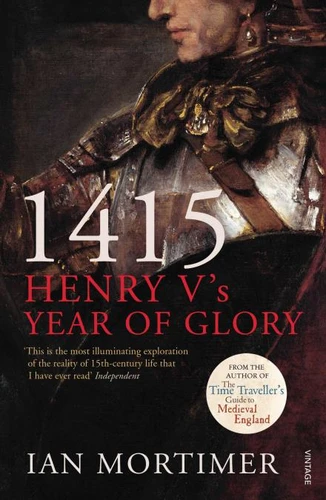
Henry V is regarded as the great English hero. Lionised in his own day for his victory at Agincourt, his piety and his rigorous application of justice, he was elevated by Shakespeare into a champion of English nationalism for all future generations. But what was he really like? Does he deserve to be thought of as 'the greatest man who ever ruled England?'In Ian Mortimer's groundbreaking book, he portrays Henry in the pivotal year of his reign.
Recording the dramatic events of 1415, he offers the fullest, most precise and least romanticised view we have of Henry and what he did. The result is not only a fascinating reappraisal of Henry; it brings to the fore many unpalatable truths which biographers and military historians have largely ignored. At the centre of the book is the campaign which culminated in the battle of Agincourt: a slaughter ground designed not to advance England's interests directly but to demonstrate God's approval of Henry's royal authority on both sides of the Channel.
Henry V is regarded as the great English hero. Lionised in his own day for his victory at Agincourt, his piety and his rigorous application of justice, he was elevated by Shakespeare into a champion of English nationalism for all future generations. But what was he really like? Does he deserve to be thought of as 'the greatest man who ever ruled England?'In Ian Mortimer's groundbreaking book, he portrays Henry in the pivotal year of his reign.
Recording the dramatic events of 1415, he offers the fullest, most precise and least romanticised view we have of Henry and what he did. The result is not only a fascinating reappraisal of Henry; it brings to the fore many unpalatable truths which biographers and military historians have largely ignored. At the centre of the book is the campaign which culminated in the battle of Agincourt: a slaughter ground designed not to advance England's interests directly but to demonstrate God's approval of Henry's royal authority on both sides of the Channel.

 , qui est-ce ?