Dernière sortie
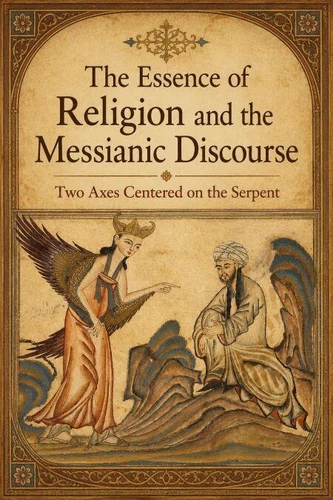
The Essence of Religion and the Messianic Discourse
The Essence of Religion and the Messianic Discourse: Two Axes Centered on the Serpent is a provocative study of religious symbolism, messianic prophecy, and the hidden logic that connects ancient myth with modern culture. Beginning with the question of what religion truly is, the book argues that religion cannot be reduced to temples, doctrines, or institutions. It is a structure of desire, reverence, sacrifice, fear, and symbolic orientation.
In the modern world, that structure has not disappeared. Rather, it has migrated into media, celebrity culture, fashion, sports, ideology, and entertainment. The ancient problem of idolatry has therefore not vanished; it has changed its form. At the center of this inquiry stands the serpent. The serpent appears across biblical tradition, ancient myth, gnostic symbolism, and modern visual culture as a sign of temptation, wisdom, rebellion, hidden knowledge, and counterfeit salvation.
From this axis, the book develops a second axis: the messianic figure. Through biblical prophecy, the lamb, the rooster, Abraxas, the Antichrist, the wounded hero, and the one-eyed protagonist, the book explores how modern stories repeatedly stage distorted images of salvation, sacrifice, and apocalyptic destiny. Drawing on the Bible, gnostic traditions, comparative mythology, popular media, webtoons, film, and apocalyptic prophecy, this work does not present itself as a conventional theological manual.
It is a symbolic investigation. Its purpose is to trace recurring patterns, expose the religious grammar hidden inside modern culture, and ask why the same images-serpents, idols, eggs, wounded saviors, blind heroes, and false messiahs-continue to return. For readers interested in biblical prophecy, religious symbolism, Gnosticism, myth, apocalyptic imagination, and the spiritual meaning of modern media, this book offers a daring and unconventional map of the symbolic battlefield surrounding the Messiah.
In the modern world, that structure has not disappeared. Rather, it has migrated into media, celebrity culture, fashion, sports, ideology, and entertainment. The ancient problem of idolatry has therefore not vanished; it has changed its form. At the center of this inquiry stands the serpent. The serpent appears across biblical tradition, ancient myth, gnostic symbolism, and modern visual culture as a sign of temptation, wisdom, rebellion, hidden knowledge, and counterfeit salvation.
From this axis, the book develops a second axis: the messianic figure. Through biblical prophecy, the lamb, the rooster, Abraxas, the Antichrist, the wounded hero, and the one-eyed protagonist, the book explores how modern stories repeatedly stage distorted images of salvation, sacrifice, and apocalyptic destiny. Drawing on the Bible, gnostic traditions, comparative mythology, popular media, webtoons, film, and apocalyptic prophecy, this work does not present itself as a conventional theological manual.
It is a symbolic investigation. Its purpose is to trace recurring patterns, expose the religious grammar hidden inside modern culture, and ask why the same images-serpents, idols, eggs, wounded saviors, blind heroes, and false messiahs-continue to return. For readers interested in biblical prophecy, religious symbolism, Gnosticism, myth, apocalyptic imagination, and the spiritual meaning of modern media, this book offers a daring and unconventional map of the symbolic battlefield surrounding the Messiah.
Les livres de KIM SIHEUM

2,99 €
6,99 €
6,49 €